
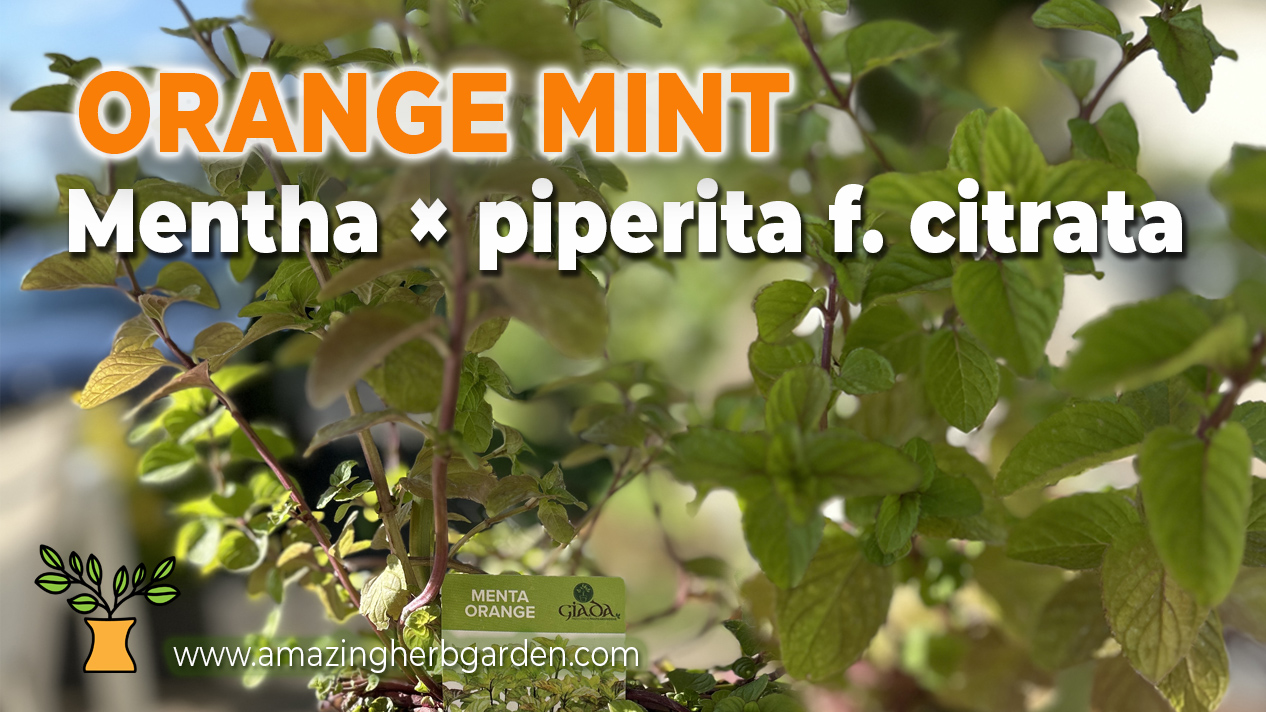
Orange Mint: Why it smells like Citrus (and it‘s not the reason You’d guess)
Everything genuinely interesting about orange mint: the actual chemistry behind that citrus smell, where this plant grows wild, what its flowers really look like, and the odd historical detour it took through French liqueur and German perfume. I’ll leave the pot-and-watering basics brief and link you to my full how-to guide instead; this one’s about what makes orange mint different, not what makes it the same as every other mint I grow.
The short answer: Orange mint (most commonly labelled Mentha × piperita f. citrata, though its true parentage is genuinely disputed among botanists) is a fragrant mint whose citrus-like scent comes from linalool and linalyl acetate, the same aromatic compounds found in lavender and in bergamot orange peel, not the limonene that gives an actual orange its smell. It’s a plant with a documented history in perfumery (it’s one of the original scents behind Eau de Cologne) and in French monastery liqueur-making, native in habit to damp streambanks and wetland edges rather than the dry Mediterranean conditions you might picture. For potting basics, soil, watering and propagation, it follows the same simple rules as every mint in my growing mint guide — so let’s spend this page on what actually sets it apart.
In this guide
What is orange mint, really? (the taxonomy is a genuine mess)
Why does it smell like orange? The real chemistry
Where does orange mint grow in the wild?
What do the flowers actually look like?
A surprising history: Eau de Cologne and a 130-herb French liqueur
How it’s actually used, in the kitchen and beyond
Quick growing notes (with a link to the full how-to)
What is orange mint, really?
Here’s something most orange mint write-ups skip entirely: botanists genuinely can’t agree on what this plant is.
- The Royal Horticultural Society classifies it as Mentha × piperita f. citrata — essentially a citrus-scented form of peppermint.
- A 1970 genetic study found that most cultivated plants sold under this name are actually male-sterile forms of water mint (Mentha aquatica), and reclassified them as Mentha aquatica var. citrata.
- The World Checklist of Selected Plant Families goes further still and folds both names into plain Mentha aquatica, treating the citrus scent as just one chemical variant of water mint rather than a distinct hybrid at all.
So depending which reference you trust, orange mint is either a peppermint relative, a scented form of water mint, or simply water mint itself. I’m not going to pretend there’s a tidy answer, because there genuinely isn’t one — this sits in exactly the same “mints don’t respect clean taxonomy” territory as my mojito mint (a documented sterile hybrid) and glacial mint (whose “own” species name turned out to be a synonym of apple mint). If you take one thing from this section: the common names “orange mint,” “bergamot mint” and “Eau de Cologne mint” all refer to the same plant — the confusion is entirely about which botanical Latin to attach to it, not about there being several different plants involved.
Why does orange mint actually smell like orange?
This is the part I find genuinely fascinating, and it’s not what I expected before I looked into it.
Orange mint’s scent is overwhelmingly built from two compounds: linalyl acetate and linalool, which together make up roughly 90% of its essential oil. That’s an unusually simple, concentrated aromatic profile compared to most mints.
Here’s the twist: a real orange’s smell comes mainly from limonene — a completely different molecule. So orange mint isn’t chemically mimicking the fruit its common name suggests at all. What it’s actually doing is something closer to what makes bergamot orange (Citrus bergamia — the citrus fruit that flavours Earl Grey tea) and lavender smell the way they do, since linalool and linalyl acetate are major aromatic contributors in both of those too. That’s precisely why this same plant is just as often sold as “bergamot mint” — not because it’s confused with a different plant (more on that below), but because its actual chemistry genuinely does lean toward bergamot’s fragrance family rather than a sweet orange’s.
My honest impression, crushing a leaf myself: it’s a softer, more floral citrus note than I expected — closer to what I’d call a herby, lavender-adjacent citrus than a sharp, zesty orange-peel smell. If you’re expecting something that smells like actual orange zest, adjust that expectation slightly; this is a gentler, more perfumed version of “citrus.”
Where does orange mint grow in the wild?
This surprised me too. Whichever parentage theory you go with, one of the plants involved — water mint (Mentha aquatica) — is a genuinely aquatic-leaning species. In the wild, it grows along streambanks, ditches, pond edges and other permanently damp or wet ground across Europe and temperate Asia, often standing with its roots in shallow water.
That’s a very different picture from the sun-baked, dry-soil image most people (myself included, growing here in Rome) default to when they think “Mediterranean herb.” Orange mint’s wetland ancestry is exactly why it tolerates — and even prefers — consistently moist soil far more readily than a herb like rosemary or thyme ever would. It’s a genuine reminder that “mint” as a family spans everything from dry hillside natives to plants that are functionally semi-aquatic in the wild.
What do orange mint’s flowers actually look like?
If you let a stem run to flower (and one or two is worth doing, if only for this), orange mint produces small tubular flowers in shades of pale lilac to mauve, sometimes closer to white, clustered into dense terminal spikes at the top of each stem, blooming from mid to late summer.
That “terminal spike” shape matters if you’ve read my piece on menta romana and pennyroyal: it’s the same reassuring, slim, upright flower spike pattern every true mint produces, not the tight whorled rings spaced up the stem that mark out pennyroyal. Bees and butterflies are reliably drawn to the flowers, for what it’s worth, if you’re happy to sacrifice a bit of leaf production for a few weeks of pollinator activity.
A surprising history: Eau de Cologne and a 130-herb French liqueur
Two genuinely fun facts I didn’t expect to find:
- Its scent is tied to the origin of Eau de Cologne itself. Orange mint’s linalool/linalyl acetate-heavy oil has long been used in perfumery, and its aromatic profile is cited as part of what shaped the original Eau de Cologne fragrance — which is exactly where the plant’s other common name, “Eau de Cologne mint,” comes from.
- It’s one of around 130 herbs used to make Chartreuse, the famous French liqueur produced by Carthusian monks — a genuinely obscure detail for a plant most people only encounter in a herb garden.
Neither of those is the kind of thing you’d guess from a small pot on a windowsill, which is part of why I think orange mint deserves more attention than it usually gets in beginner grower content.
How orange mint is actually used, in the kitchen and beyond
Given that softer, more floral citrus character (rather than a sharp, zesty one), orange mint suits gentler pairings:
- Cream-based desserts — ice cream, crème brûlée, fruit tarts — its citrus-floral note works well against richness.
- Fruit and fruit salads — a natural partner, unsurprisingly.
- Tea — a pleasant, distinctly perfumed alternative to plain mint tea; think of it as sitting somewhere between a mint tea and an Earl Grey.
- A little goes further than you’d expect — several sources note this as one of the more potent, concentrated mints in aroma and flavour, so start with less than you would for spearmint in the same recipe.
Quick growing notes (full detail lives in my main guide)
Rather than repeat the same pot-size, watering and feeding advice that applies to every mint I grow, here’s what’s specific to this one:
- Loves consistently moist soil more than most mints, given its water mint ancestry — err toward the damper end of “lightly moist,” rather than letting it dry out between waterings the way you might with a drier-loving herb.
- Height and spread: typically 40–60 cm (16–24 in) tall, similar footprint to most upright mints — a standard 20–25 cm (8–10 in) pot suits it well.
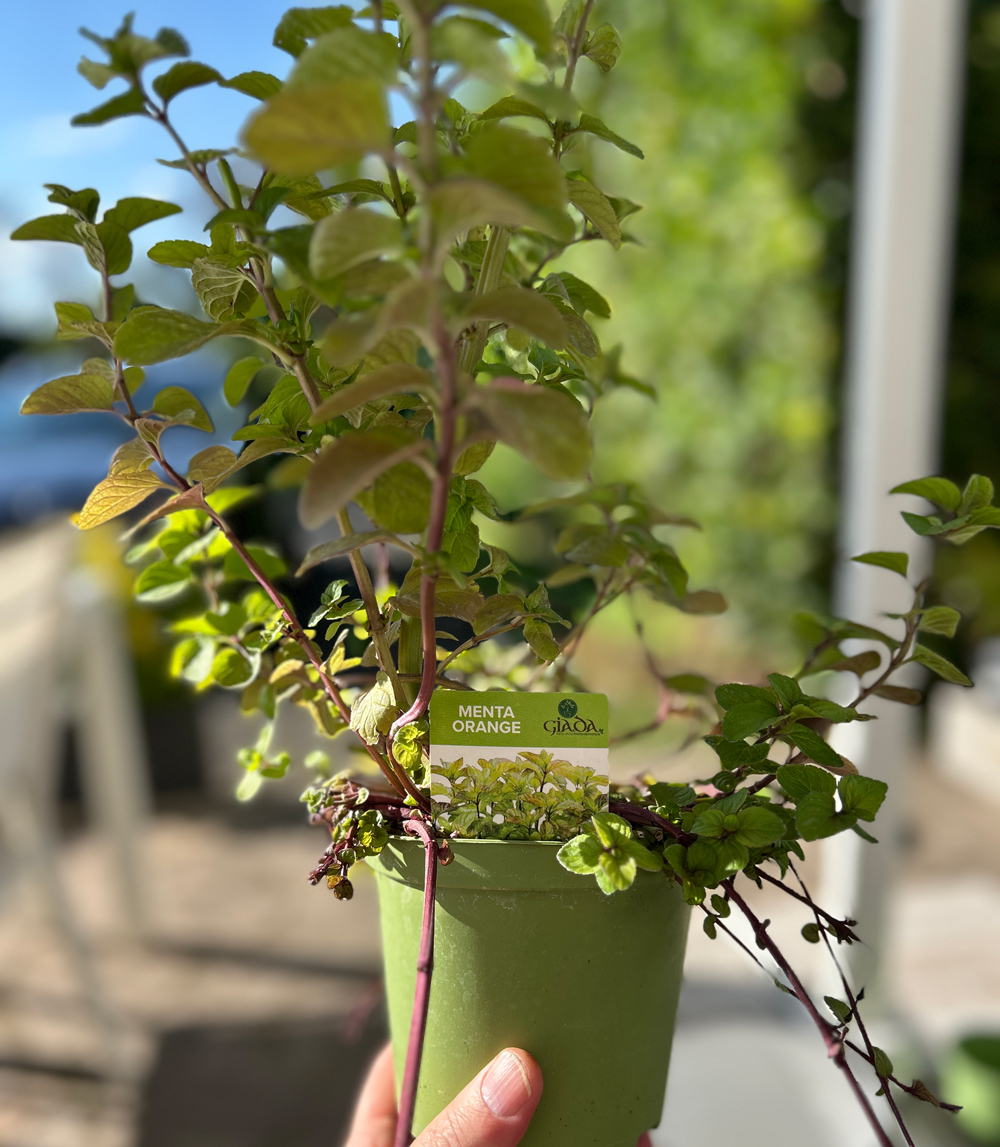
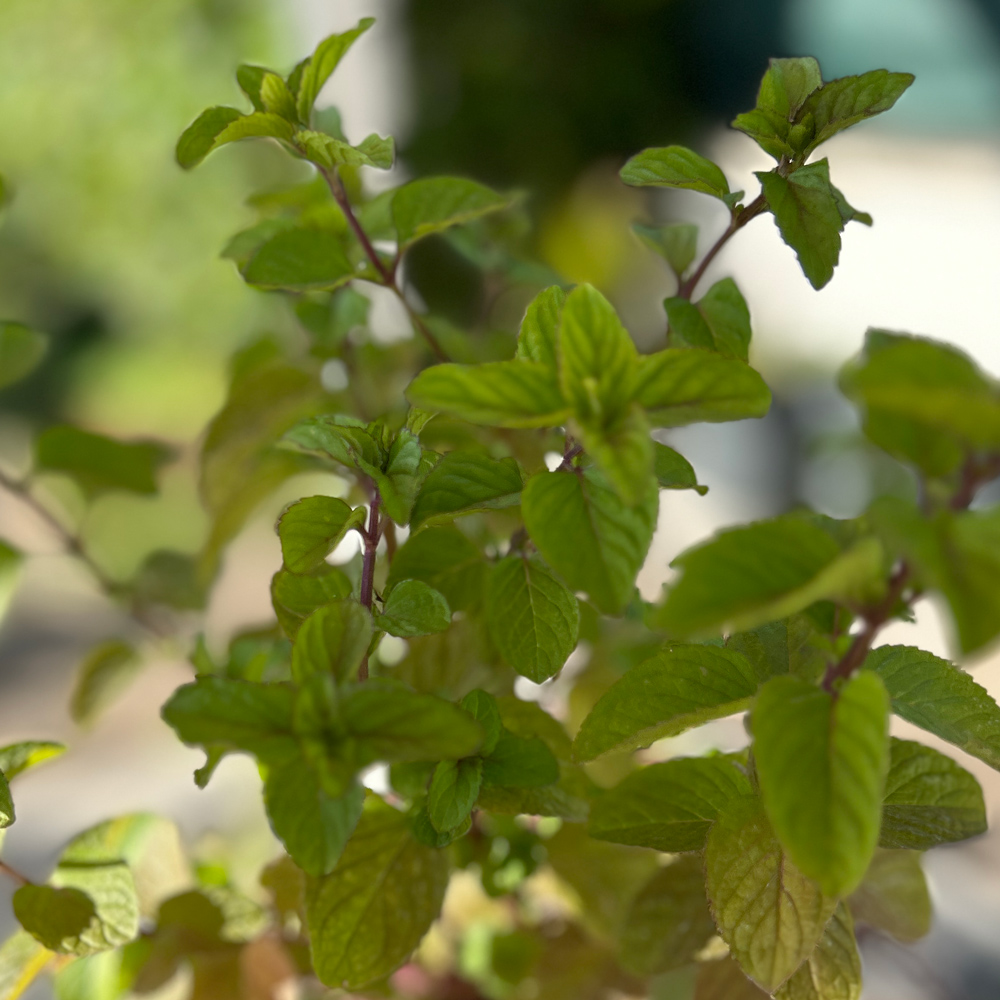
- Stems range from green to burgundy-purple, and leaves are small, dark green and ovate — useful for confirming you’ve got a genuine Mentha type on your hands, versus something like the Monarda mix-up below.
For everything else — soil mix, watering rhythm, feeding, pot choice, pests and overwintering — it follows exactly the routine in my complete beginner’s guide to growing mint in pots, and propagates the same easy way by cuttings or division as the rest of my mint collection. Given the sterile or near-sterile nature most sources report for this hybrid, cuttings and division are also the reliable route — seed exists but won’t consistently grow true to type.
Orange mint vs “Menta Bergamotto” — the plant twist
If you’ve read my piece on the pot labelled “Menta Bergamotto” that turned out to be Monarda didyma (bee balm) and not a mint at all, here’s the detail that ties the two stories together: orange mint is also very commonly sold as “bergamot mint” — and unlike the Monarda impostor, this one earns the name honestly, since its actual chemistry (linalool and linalyl acetate) genuinely echoes bergamot orange’s fragrance profile.
So if you’re hunting for true bergamot mint, orange mint — the plant on this page — is the real thing. The pot labelled “Menta Bergamotto” that turned out to be bee balm is the one to treat with more suspicion. Same rough shared name, two completely different plants, and only one of them is an actual mint.
Frequently asked questions
Does orange mint really smell/taste like oranges?
Not exactly — its scent comes from linalool and linalyl acetate, the same compounds found in lavender and in bergamot orange, rather than the limonene that gives a real orange its smell. Expect something more floral-citrus than sharp orange zest.
Is orange mint the same as bergamot mint?
Yes — “orange mint,” “bergamot mint” and “Eau de Cologne mint” are all common names for the same plant. This is different from the plant sometimes mislabelled “Menta Bergamotto” in Italian nurseries, which is often actually Monarda didyma (bee balm), a different genus entirely.
Where does orange mint originate?
Its most likely parent, water mint (Mentha aquatica), is native to wet, marshy ground and streambanks across Europe and temperate Asia — a genuinely different habitat from the dry Mediterranean conditions many people picture for “mint.”
What do orange mint flowers look like?
Small, pale lilac to mauve tubular flowers in dense, upright terminal spikes, blooming mid to late summer — the same reassuring “true mint” spike shape as spearmint or chocolate mint, not the whorled rings of pennyroyal.
Can I grow orange mint from seed?
Seed exists, but since the plant is a hybrid (and reportedly largely sterile), seed-grown plants don’t reliably come true to type. Cuttings or division are the dependable way to keep the genuine citrus-scented form.
Over to you
If you’re growing orange mint yourself — or you’ve crushed a leaf and thought “that’s not quite what I expected” — I’d genuinely like to know what your own nose makes of it. Drop a comment below, and if this is your first mint pot, take a cutting now; you’ll have a second plant within a couple of weeks for free.
Keep growing (links to more interesting stuff)
- Growing Mint: Everything I’ve Learned — the full mint hub, every variety and guide in one place.
- How to Grow Mint in Pots: The Complete Beginner’s Guide — the practical how-to this page builds on.
- Glacial Mint: My Complete Guide — another mint whose name doesn’t mean what you’d assume.
- Menta Romana: Is It Pennyroyal, and Is It Safe to Eat? — the flower-spike identification method referenced above.
- Chocolate Mint: Complete Growing & Care Guide — another mint with a name that oversells (or undersells) its real character.
Honesty note: some links above may be affiliate links, meaning I earn a small commission if you buy through them at no extra cost to you. I only recommend simple, genuinely useful kit I’d use myself.
Leave a Reply
Want to join the discussion?Feel free to contribute!