
Glacial Mint: My Complete Guide to Growing, Using and Naming It Honestly
Everything I’ve learned about growing glacial mint: what “glacial” actually means (spoiler — it’s not what you think), how to keep it happy in a pot, how to make more of it for free, and where it fits next to the other mints in my collection.
The short answer: Glacial mint (Mentha rotundifolia, more properly known today as Mentha suaveolens — more on that naming tangle below) is a soft, fuzzy-leaved, apple-scented mint, closely related to apple mint and pineapple mint. Despite the name, it isn’t a sharp, icy, high-menthol mint — it’s gentler and fruitier than that. It grows the same way every mint does: give it a pot, free-draining but moisture-retentive compost, a bright spot, and consistently moist soil, and it will reward you all season. It’s one of the easiest of all the mints to keep alive.
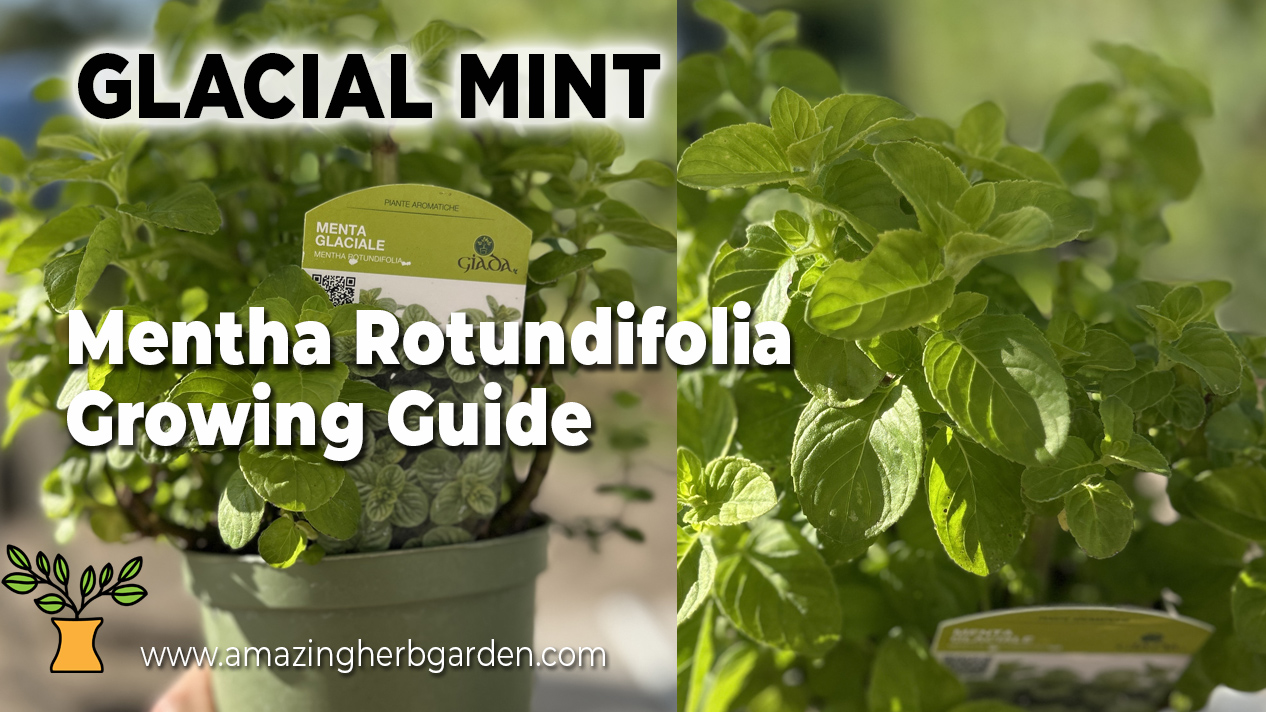
What is glacial mint, really?
Here’s the bit the nursery label doesn’t tell you: “glacial mint” is a marketing name, not a distinct species. The tag on my pot reads “Menta Glaciale — Mentha rotundifolia,” and that botanical name is real — but it’s also one of the more tangled names in the entire mint family, so let me untangle it honestly rather than just repeat the label.
Mentha rotundifolia was, for a long time, treated as a proper species in its own right — the “round-leaved mint.” Modern botanical databases (Plants of the World Online, and the taxonomic reviews behind them) now treat it as a synonym of Mentha suaveolens — the plant you’ll also see sold as apple mint, pineapple mint or woolly mint. To make it messier still, there’s a second, unrelated plant also called Mentha × rotundifolia (with a little “×” denoting a hybrid) — a genuine cross between M. longifolia and M. suaveolens. Botanists writing about mint taxonomy have flagged this exact “×” confusion as a source of real mix-ups in the scientific literature, never mind at the garden centre.
What actually matters for you, growing it in a pot: whichever precise label it’s wearing, the plant sold as “glacial mint” behaves like an apple mint — soft, rounded, faintly hairy leaves; an upright, bushy habit; a fruity, mild scent rather than a sharp menthol one; and all the same easy-going, spreading nature every mint has.
You’ll recognise it by looks alone: rounded to oval leaves, textured and slightly fuzzy to the touch (a “woolly” texture is the classic description), a bright mid-green colour, growing on the square stems every member of the mint family shares.
This is the question the name begs, so let me answer it straight: no, it doesn’t taste icy, sharp or particularly cooling — and it shouldn’t.
“Glacial” here is a branding choice, not a flavour description. The plant is, botanically, an apple mint — and apple mint’s chemistry is built around compounds like carvone and rotundifolone, not the high menthol content that gives peppermint its cold, tingling hit. If you’re expecting something like biting into a wintergreen sweet, temper that expectation now.
My honest verdict on the scent and taste: crushing a leaf from my own plant gives me something soft, green and a little fruity — closer to a mellow apple-mint character than anything you’d call “icy.” There’s a freshness to it, for sure — all mints have that — but it’s a gentle freshness, not a menthol chill. If anything, I’d guess the “glacial” name is chasing the same instinct as “ice mint” branding you sometimes see on packaged teas: it’s evocative marketing for a fresh-tasting herb, not a literal chemical claim.
Worth doing yourself: crush a leaf at different times of day, the way I do with my chocolate mint. Aromatic oils in mint leaves are more pronounced when the leaf is warm and freshly bruised, so a midday leaf, crushed straight off the plant, will always give you the truest impression.
How to grow glacial mint
The reassuring news: everything that makes mint the easiest herb for beginners applies here too. Glacial mint asks for very little.
Light
Give it partial shade to full sun. Being an apple-mint type, it’s naturally a little more tolerant of part-shade than some other mints, since apple mint originates from woodland edges and damp, part-shaded ground in the wild — but it’s perfectly happy in a bright spot too, and more sun tends to mean a fuller, denser plant.
Growing here in Rome, this is one of the mints I’m least worried about in high summer — its natural preference for a bit of shade means it copes with our fierce afternoon sun better than some of my other pots. A little relief from the harshest midday hours still helps it look its best, though.
Soil
Free-draining but moisture-retentive compost is the goal — a good peat-free multipurpose mix does the job. It isn’t fussy about soil pH. What it won’t forgive is either extreme: bone-dry compost or a pot standing permanently waterlogged.
Water
Keep the soil lightly and consistently moist, exactly as with every mint in my collection. Push a finger 2–3 cm (about an inch) into the soil: dry at that depth, water it; still damp, leave it. Always tip away any water that collects in the saucer.
Underwatering shows up fast (dramatic wilting) but recovers within hours of a good drink. Overwatering is the sneakier problem — it rots roots quietly from below, so when genuinely unsure, let the top of the soil dry slightly before watering again.
Feeding
Like all mints, it’s a light feeder. A weak general-purpose feed every few weeks through the height of summer is plenty — more than that tends to produce soft, floppy growth with a weaker scent, not a better one.
Potting it up
- Pot size: at least 20–25 cm (8–10 inches) across, with good drainage holes.
- One mint, one pot — never mix glacial mint with another mint variety in the same container; the more vigorous one will outcompete the other.
- Plant at the same depth it sat in its nursery pot, firm in gently, and water it in well.
How to make more glacial mint for free (propagation)
Like every mint I grow, this one is a brilliant, nearly foolproof propagation project.
Cuttings in water (the easiest method)
- Cut a healthy, non-flowering sprig 8–10 cm (3–4 inches) long, just below a leaf node.
- Strip the lower leaves so no foliage sits below the waterline.
- Stand it in a glass of water on a bright windowsill, out of harsh direct sun.
- Change the water every couple of days.
- Roots typically appear within one to two weeks. Once they’re a few centimetres long, pot the cutting into moist compost and keep it lightly watered while it settles.
Cuttings straight into soil
Push a prepared cutting directly into a small pot of moist compost instead of water. Keep it consistently damp (not soggy) until you see new growth — a slightly slower route, but it skips the transplant shock some cuttings show when moved from water to soil.
Division
Every year or two, tip the whole plant out, split the rootball into sections by hand or with a clean knife, and repot each piece into fresh compost. This also refreshes an older plant that’s become a dense, exhausted mass of roots.
Skip seed with this one too — like most named mint varieties, it’s propagated from cuttings and divisions to keep it true to type, not grown reliably from seed.
Harvesting
Start picking once the plant is well established, and use the same rule that applies to every mint I grow: pinch the growing tips, don’t strip individual leaves.
- Cut just above a pair of healthy leaves — this signals the plant to send out two new shoots from that point, building a fuller, bushier plant.
- Harvest in the morning, when the aromatic oils are at their peak.
- Never take more than about a third of the plant at once.
- Regular harvesting doubles as pruning, keeping the plant compact and slowing it from running to flower.
Storing and preserving the leaves
- Fridge: stand cut sprigs in a glass of water, or wrap loosely in a damp cloth — good for several days.
- Drying: hang small bundles somewhere warm, dark and airy; a mild-scented mint like this one benefits from gentle drying rather than harsh heat, which can drive off its softer aromatics.
- Freezing: chop and freeze in ice cube trays topped with water, ready to drop into drinks or sauces.
Ways to use glacial mint
Given its gentle, fruity, apple-mint character, this is a mint that suits softer, sweeter pairings better than sharp savoury ones:
- Tea — its mild character makes a pleasant, less intense alternative to spearmint or peppermint tea.
- Fruit salads and desserts — its soft apple-like note pairs naturally with fruit.
- Infused water or lemonade — a few bruised leaves add a gentle lift without overpowering.
- Savoury use is possible but subtler — expect a softer contribution than spearmint would give the same dish.
Common pests and diseases
The same short list that applies to every mint I grow:
- Mint rust — orange-brown pustules under the leaves. Remove and bin (never compost) affected leaves, improve airflow, and water at the base rather than overhead. (Full guide: How to Avoid Fungus Gnats covers the related damp-compost pests too.)
- Aphids — sticky leaves, clusters of small insects. Rinse off, squash, or use a gentle insecticidal soap.
- Fungus gnats — tiny flies from compost kept too wet. Let the top of the soil dry out more between waterings.
- Root rot — from a pot that’s allowed to sit waterlogged. Prevention (drainage, not overwatering) is the only real cure.
Is glacial mint safe to eat? Is it safe for pets?
This is general, educational information, not medical or veterinary advice.
For people: yes — like the other true mints in my collection (spearmint, chocolate mint), glacial mint is a genuine culinary mint, safe to use in the kitchen in ordinary amounts. As with any herb, if you’re pregnant, breastfeeding, or managing a medical condition, it’s worth a quick word with your doctor.
For pets: mint as a genus is listed among plants that are toxic to cats and dogs, due to the essential oils it contains. A curious nibble of a fresh leaf is unlikely to cause harm, but eating a large quantity can cause vomiting or diarrhoea, and concentrated mint essential oil should never be applied to a pet or left somewhere they can reach it. If you’re worried about a pet that’s eaten a substantial amount, contact your vet or an animal poison line.
Overwintering
Like apple mint generally, this is a hardy perennial, so the same plant will come back year after year.
- Mild winters (mine, here in Rome): it may keep going with minimal pause, or only partially die back.
- Cold winters: the top growth dies back completely to the roots — entirely normal, don’t discard the pot. Trim the dead growth, protect the pot from the hardest freezes, water sparingly, and fresh shoots return once the soil warms.
- Refresh every year or two by dividing and repotting into fresh compost.
Glacial mint vs apple mint vs spearmint vs chocolate mint
| Glacial mint | Apple mint | Spearmint | Chocolate mint | |
|---|---|---|---|---|
| Botanically | Mentha rotundifolia (= M. suaveolens) | Mentha suaveolens | Mentha spicata | Peppermint cultivar |
| Leaf look | Rounded, fuzzy, mid-green | Rounded, woolly, mid-green | Bright green, crinkled | Dark green, bronze-tinged |
| Scent/flavour | Mild, fruity, gently “fresh” — not icy | Fruity, apple-like | Classic bright mint, low menthol | Peppermint with a warm, sweet edge |
| Best for | Tea, fruit, light infusions | Fruit dishes, jellies, teas | Savoury cooking, sauces, mojitos | Desserts, sweet drinks |
| Grows from seed? | No — cuttings/division only | No — cuttings/division only | Often, though variable | No — sterile hybrid |
| Spreads? | Yes — contain it | Yes — contain it | Yes — contain it | Yes — contain it |
(Honest note: glacial mint and apple mint are so closely related — effectively the same species under current taxonomy — that you may find very little practical difference between them beyond the name on the label.)
Prefer to watch?
🎬 Video coverage of this pot, from potting day through to its first cuttings, is in the works — I’ll link it here once it’s up.
Frequently asked questions
Is glacial mint the same as apple mint? Essentially, yes. Modern botanical classification treats Mentha rotundifolia as a synonym of Mentha suaveolens (apple mint) — “glacial mint” is a nursery/marketing name for the same plant, or a very close relative of it.
Does glacial mint taste cold or icy? No — despite the name, it has a mild, fruity, apple-mint-like flavour rather than a sharp, menthol “icy” one. The name is a branding choice, not a flavour description.
Can I grow glacial mint from seed? It’s sold and grown as a named variety, so cuttings or division give you a reliable, true-to-type plant — the safer route, as with most named mints.
Does glacial mint spread like other mints? Yes. All mints, including this one, spread vigorously by runners and rhizomes. Always grow it in a container.
Is glacial mint safe for cats and dogs? Mint as a genus is listed as toxic to cats and dogs due to its essential oils, though a small nibble rarely causes harm. Concentrated mint essential oil is genuinely dangerous to pets and should be kept well out of reach.
Why is my glacial mint wilting? Almost always thirst — check the soil at 2–3 cm depth, and a thorough watering should revive it within a couple of hours. If the soil is already wet and it’s still wilting, suspect root rot from poor drainage instead.
Over to you
If you’re growing glacial mint — or you’ve just found a “Menta Glaciale” or similarly named pot at your own nursery — I’d love to know: does the name match what you’d expect, or did it surprise you the way the taxonomy did me? Tell me in the comments, and if you’ve just potted one up, take a cutting straight away — it’s the easiest free plant you’ll get all season.
Keep growing (links to more interesting stuff)
- Growing Mint: Everything I’ve Learned — the full mint hub, every variety and guide in one place.
- How to Grow Mint in Pots: The Complete Beginner’s Guide — the practical how-to this page builds on.
- Chocolate Mint: Complete Growing & Care Guide — another honest look at a confusingly-named mint.
- Menta Romana: Is It Pennyroyal, and Is It Safe to Eat? — for when a mint label really does hide something important.
- Best Soil for Herbs — supports the soil and potting sections above.
Honesty note: some links above may be affiliate links, meaning I earn a small commission if you buy through them at no extra cost to you. I only recommend simple, genuinely useful kit I’d use myself.
Click here to add your own text
Leave a Reply
Want to join the discussion?Feel free to contribute!