
Chocolate Mint: My Complete Guide to Growing, Using and Identifying It
Everything I’ve learned about growing chocolate mint: what it really tastes of, how to keep it alive and stop it taking over, how to make more for free, and whether it’s safe around your pets.
The short answer: Chocolate mint (Mentha × piperita f. citrata ‘Chocolate’) is a dark-leaved cultivar of peppermint that smells of a cool after-dinner mint with a warm, chocolatey edge. It’s one of the easiest herbs you can grow — it asks only for moist soil, a few hours of sun and a pot to keep it from spreading. It contains no actual chocolate (and no caffeine), it won’t grow true from seed, and like all mints it should be kept away from cats and dogs. Grow it in a container, water it often, pinch it back, and you’ll have fragrant leaves all season.
In this guide
– The short answer(#short-answer)
– What is chocolate mint, really?(#what-is-it)
– Does it actually taste of chocolate? (my honest verdict) (#taste)
– How to grow chocolate mint (#how-to-grow)
– How to make more for free (propagation) (#propagation)
– Harvesting (#harvesting)
– Storing and preserving the leaves (#preserving)
– Ways to use it (#uses)
– Common pests (#pests)
– Mint rust and other diseases (#diseases)
– Is it safe to eat? (#safe-to-eat)
– Is it safe for cats and dogs? (#pet-safety)
– Overwintering (#overwintering)
– Chocolate mint vs peppermint vs spearmint (#comparison)
– Prefer to watch? (#video)
– FAQ (#faq)
What is chocolate mint, really?
Chocolate mint isn’t a separate species — it’s a named cultivar of peppermint. Peppermint itself is a natural hybrid, a cross between watermint (Mentha aquatica) and spearmint (Mentha spicata), and ‘Chocolate’ is one of the darker, more aromatic selections to come out of that line.
I’ll be honest about one thing the tidy guides gloss over: the plant’s exact parentage is a little contested. Some sources say ‘Chocolate’ was selected from the orange-mint (citrata) branch of peppermint; others say it came more directly from the watermint × spearmint cross. The truth is the records aren’t crystal clear, and anyone who tells you the lineage is settled is being more confident than the evidence allows. What everyone does agree on is that it’s a cultivar of peppermint in the family Lamiaceae — and that it smells wonderful.
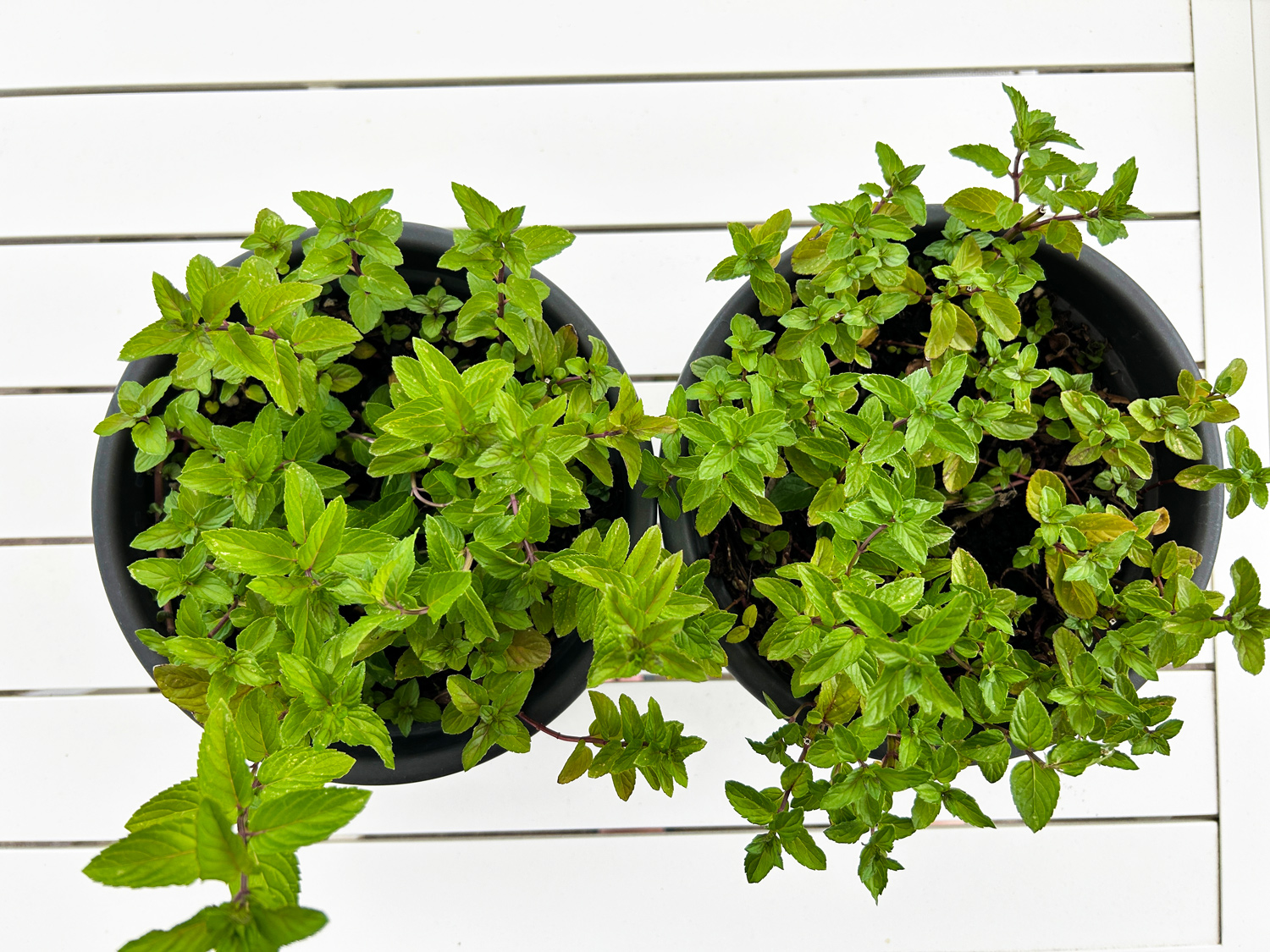
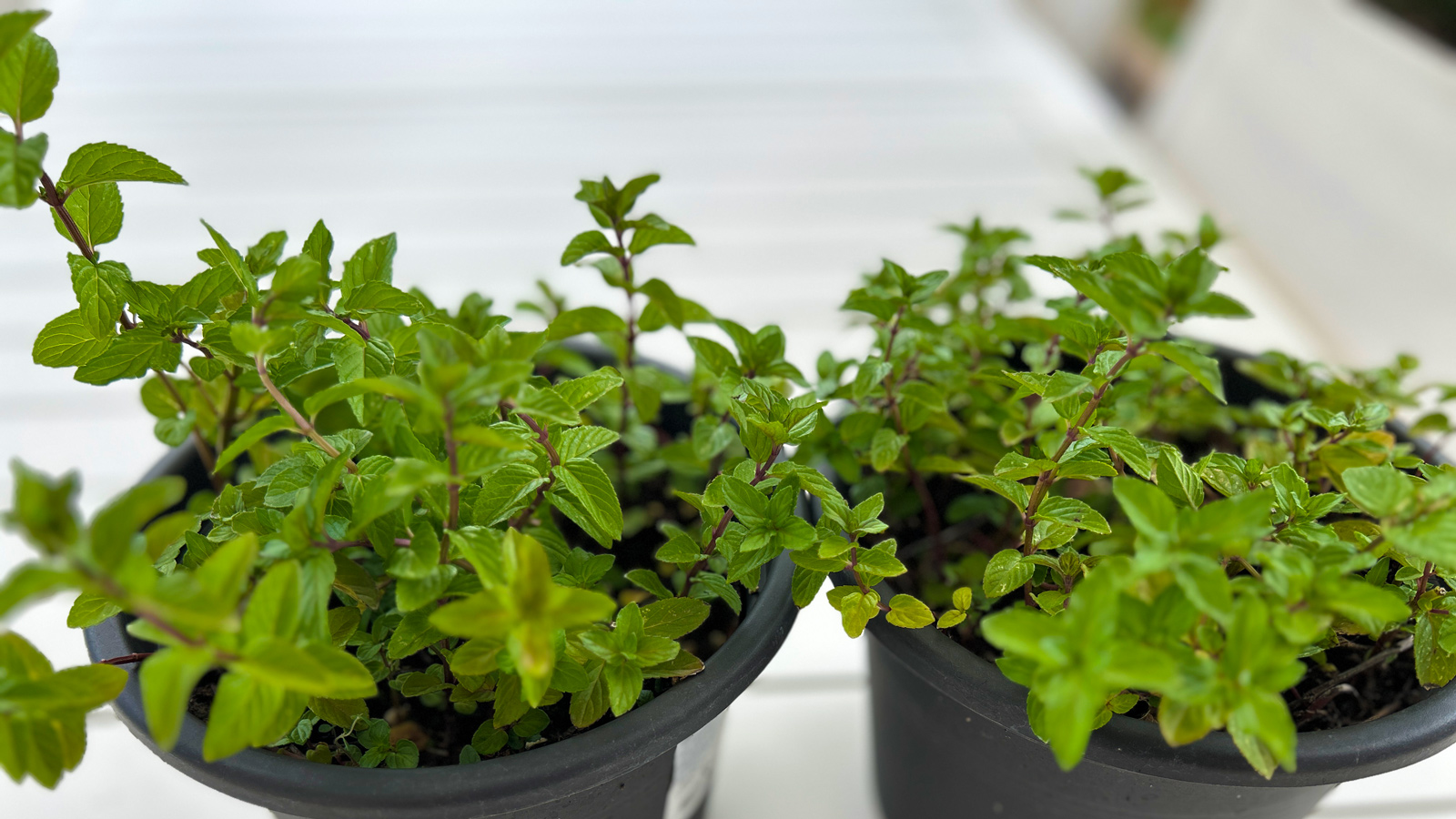
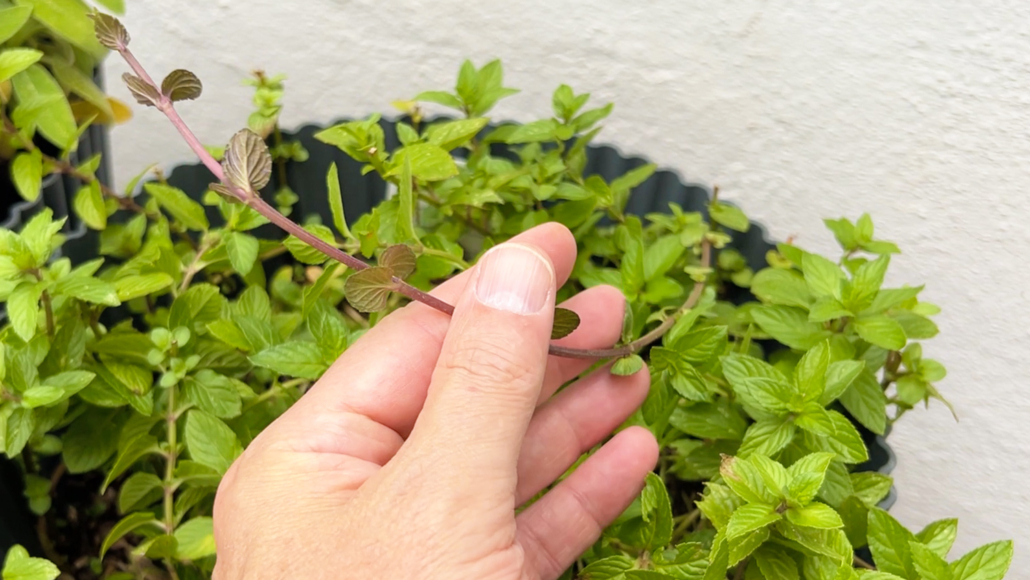
You’ll recognise it by its looks as much as its scent: dark green leaves, often flushed reddish-bronze or purple, sitting on dark, reddish-brown square stems (that square stem is the family signature of the mints). In summer it sends up slender spikes of small lilac flowers that the bees adore.
🔗 Want to visit out Mint Hub : Growing Mint Hub.
Does chocolate mint actually taste of chocolate?
This is the question everyone asks, so let me answer it plainly: no, it doesn’t taste of chocolate — and it shouldn’t.
There is no cocoa in the plant, no caffeine and no theobromine (more on that myth later in the pet-safety section). What you get is a peppermint flavour with a warm, rounded, slightly sweet undertone that reminds people of an after-dinner chocolate mint — an After Eight, an Andes mint, the inside of a Thin Mint. The “chocolate” is an association your nose makes, not an ingredient.
And people genuinely disagree about how strong that association is. Some gardeners crush a leaf and immediately get the chocolate note; others smell straightforward peppermint and nothing more. Both are right — scent perception is personal, and the warm undertone is subtle. The best advice I can give is to grow one, crush a leaf on a warm day, and decide for yourself.
My honest verdict on the scent
I’ll be straight with you: when I crush a leaf from my own plants, I don’t really get chocolate — what I smell is peppermint, clean and cool and very pleasant, with only the faintest suggestion of anything sweeter. So if you’re expecting an open box of After Eights, temper that: it’s peppermint first.
I do wonder if the scent shifts with conditions: it seems a little different on dewy morning leaves than on warm, dry afternoon ones. That’s not gospel, but it makes sense, since a mint’s aroma comes from oils that release more as the leaf warms and bruises. Worth testing yourself: crush a leaf morning, noon and evening, and see what your nose says.
Either way, the reassuring bit — like every mint, it simply smells lovely. Whether or not you catch the chocolate, it’s a fragrant plant that’s a pleasure to brush past.
How to grow chocolate mint
The good news is that chocolate mint is hard to kill — the usual ways people lose it are letting it dry out, or letting it take over. Get those two things right and the rest is easy.
Light
Aim for five to six hours of sun a day, more if you can give it. Sun is what brings out both the colour in the leaves and the depth of the scent. That said, this isn’t a Mediterranean sun-lover like rosemary — in a hot climate, fierce afternoon sun can scorch and stress it, so a spot with morning sun and some afternoon shade is ideal.
Growing here in Rome, I’ve found the balance matters: chocolate mint will happily take our spring sunshine, but by high summer it’s far happier with a little shade in the worst of the afternoon heat. It can get really hot in summers, so I try to find shady spots for all my mint plants.
Indoors, give it the brightest windowsill you have — an east- or west-facing window is perfect. Avoid baking it behind glass in harsh midday sun. If your light is weak, a small grow light may make a real difference.
Soil
Chocolate mint isn’t fussy, but it does best in rich, moisture-retentive soil that still drains. A good multipurpose potting compost is fine; mixing in a little extra organic matter (worm castings or compost) and a handful of perlite gives you that “moist but never waterlogged” balance it likes. It tolerates a wide pH range, so you rarely need to worry about that.
Water — the one thing it won’t forgive
If chocolate mint has a weakness, it’s thirst. These are thirsty plants and they will wilt fast if the soil dries out — especially in a pot on a warm windowsill, or outside in burning sun.
I always check its water-content by weighing the pots, looking at the position of leaves and stems or by pressing a finger into the top 2.5–5 cm (1–2 in) of soil. If it’s cool and damp, leave it. If it’s dry, water thoroughly until it runs from the drainage holes. In summer, a potted plant may need watering daily. The reassuring part: even a badly wilted plant will usually bounce back within a couple of hours of a good soak, so a single mistake rarely kills it.
One caveat the other direction — it likes moist, not swamp. Always grow it in a pot with drainage holes, because soil that stays soggy invites root rot.
A word on watering the leaves. You’ll often read “never wet the foliage” — and I water my own mints over the top, so let me give you the honest, fuller picture. Wetting the leaves now and then isn’t a disaster; rain does it all the time and mint shrugs it off. The thing that actually invites mint rust (those orange pustules on the leaf undersides) is foliage that stays wet for a long stretch — which is why the real culprits are evening watering, when leaves sit damp all night, and still, crowded, humid spots where they dry slowly.
So the rule I’d actually give you is about drying time, not avoiding water:
- Water in the morning if you’re going over the top, so the sun and air dry the leaves within an hour or two.
- Keep good airflow — don’t let the plants get congested; thin and harvest regularly.
- Avoid evening overhead watering, the one habit that may most likely cause trouble.
- If you ever see rust starting, switch to watering at the base until it clears.
Outdoors with decent sun and a breeze, the odd splash on the leaves is nothing to fear. It’s only when leaves stay damp for hours, again and again, that you’re rolling the dice — so time it right and you can water however suits you. In Rome I need to be more mindfull of keeping my herbs wet enough.
Feeding
Mint is a light feeder, and over-feeding actually dulls the flavour. A single annual layer of compost around the plant, or a light dose of slow-release feed in spring, is plenty. You don’t need to feed through the season.
⚠️ The big warning: chocolate mint will take over
Every mint spreads, and chocolate mint is no exception. It grows in two phases: in spring it sends up upright stems that go on to flower, and after flowering it switches to throwing out horizontal runners and underground rhizomes that root as they go. Left in open ground, it can swallow a bed and creep into a neighbour’s garden — gardeners have plenty of horror stories about exactly that.
The fix is simple: grow it in a container. A pot on the patio or windowsill keeps it perfectly in check. If you really want it in the ground, sink a bottomless bucket or large pot into the soil and plant it inside, leaving the rim a couple of centimetres proud of the surface so the runners can’t simply climb over the top.
How to make more chocolate mint for free
Here’s where chocolate mint earns its keep: it’s one of the easiest plants in the world to propagate, and you can turn one plant into a dozen at no cost. But first, the myth that costs people money:
⚠️ Don’t buy “chocolate mint seed.” Peppermint and its cultivars, including ‘Chocolate’, are sterile hybrids — they don’t produce reliable, true-to-type seed. Packets sold as “chocolate mint seed” will, at best, give you some random mint that’s nothing like the real thing. The only way to get genuine chocolate mint is from a cutting, a division, or a bought plant.
The reliable methods are all vegetative:
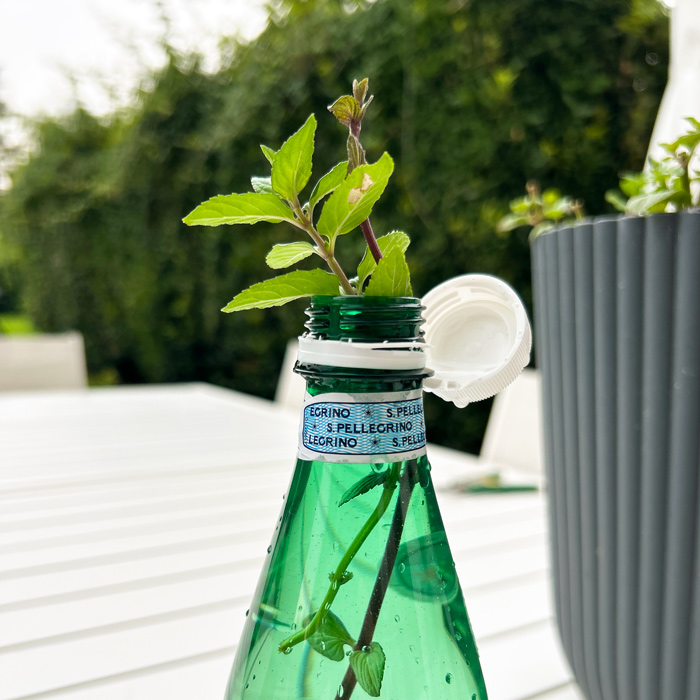
Cuttings in water (the beginner’s favourite)
- Choose a healthy, non-flowering stem about 10–15 cm (4–6 in) long.
- Cut just below a leaf node (the little bump where leaves join the stem) — that’s where the roots will form.
- Strip the leaves off the lower half so no foliage sits in the water (submerged leaves rot and foul the water).
- Stand the cutting in a glass with a few centimetres of water, somewhere bright but out of harsh direct sun.
- Change the water every couple of days. Roots usually appear within 10–14 days.
- Once the roots are 2.5–5 cm (1–2 in) long, pot the cutting into moist compost. Don’t wait too long — very long roots transplant poorly.
I am currently working to make a picture sequence of my own recent cuttings. Aim : A shot at day 1, day 10 (roots showing), and potted up (coming).
Cuttings straight into soil
Skip the water and push your prepared cuttings into a small pot of moist compost, keeping it lightly damp (not soggy). Rooting hormone isn’t necessary — mint roots itself readily — but it can speed things up. Keep out of fierce sun until you see new growth.
Division and runners
An established plant can simply be lifted and pulled apart in spring, each section replanted. Or peg down a trailing runner so a node touches soil; it will root where it sits, and you can snip it free as a new plant once established.
Harvesting chocolate mint
Start picking once the plant is around 10–13 cm (4–5 in) tall. After that you can harvest right through the growing season.
- Don’t take more than two-thirds of the plant at once — leave enough for it to recover.
- Pinch out the growing tips regularly. This does double duty: it keeps the plant bushy rather than leggy, and it slows flowering.
- The flavour is at its strongest just before the plant flowers, and in the morning when the aromatic oils are at their peak. If maximum flavour matters, pinch off flower buds as they form to keep the plant in leafy mode.
- Cutting whole stems in bunches is also how you keep the plant tidy and under control — harvesting and pruning are the same job.
Storing and preserving the leaves
Fresh is best, but chocolate mint keeps its scent surprisingly well.
- Fridge: stand cut sprigs in a glass of water, or wrap in a damp cloth — good for about four days.
- Drying: tie small bundles and hang them upside down somewhere warm, dry and out of direct sun. Dried leaves hold their fragrance well.
- Freezing: freeze whole leaves on a tray, then bag them; or freeze chopped leaves in ice-cube trays topped with water to drop straight into drinks.
- Infused oil: pack leaves into a jar, cover with a mild oil (olive, almond or coconut), and leave somewhere warm for several days before straining. (note : this last one makes an infused oil, not an essential oil. True essential oils are produced by steam distillation with specialist equipment — you can’t make a genuine essential oil in a jar on a windowsill, whatever some sites claim.)
Ways to use chocolate mint
It’s a peppermint with a sweet edge, so it shines anywhere mint and sweetness meet:
- Teas and hot drinks — a few fresh leaves make a lovely tea (have tried this); they say a sprig dropped into hot chocolate is a small luxury (haven’t tried this yet though).
- Cold drinks and cocktails — muddle it into a mojito in place of spearmint, or use it as a garnish.
- Desserts — ice cream, brownies, cakes, fruit salads, anything chocolatey.
- Savoury — like other mints, it pairs with lamb and works in fresh salads.
No actual chocolate required — the plant brings the suggestion of it all on its own.
Mint rust and other diseases
The one disease worth knowing properly is mint rust, caused by the fungus Puccinia menthae. It’s the most common reason a mint patch suddenly looks sick.
How to spot it: pale or yellow spots appear on the upper leaf surface, and the tell-tale sign — dusty orange-to-brown pustules on the undersides of the leaves. As it worsens, leaves curl, brown and drop.
Why it happens: it’s driven by wet leaves. Overhead watering, evening watering, crowding and poor airflow all let spores germinate on damp foliage (also see my previous remark about overhead watering)
What to do (home-garden approach):
- Remove and destroy infected leaves immediately — bin or burn them, don’t compost them. The spores survive composting and will reinfect you next year.
- In a bad infection, it’s safest to dig up and destroy the whole plant, rhizomes and all, because the fungus can live in the rhizomes and the soil. If you have other healthy mint nearby, lift it and move it well away to start a clean colony.
- Change how you water — at the base, in the morning, never on the leaves.
- Improve airflow — thin and space your plants, harvest regularly, and clear away debris.
I advise strongly against reaching for fungicides for a home herb you intend to eat — and for good reason, since you grow chocolate mint to put it in your tea. Cultural control (sanitation, watering, airflow) is both safer and, for a pot or two, perfectly effective.
The other two to know briefly: powdery mildew shows as a white, powdery coating and responds to the same airflow-and-spacing fixes; and root rot comes purely from waterlogged soil — the cure is drainage, not treatment.
(pictures will be added soon)
Is chocolate mint safe for cats and dogs?
A fair question, and one most growing guides skip entirely. This is general, educational information, not veterinary advice — if you’re worried about your pet (we have 2 cats …), ring your vet or an animal poison line.
The honest position: mint (Mentha species) is on the ASPCA’s list of plants that are toxic to cats, dogs and horses. The culprit is the plant’s essential oils. In practice, a curious nibble of a fresh leaf is unlikely to do harm, but eating a large amount can cause vomiting and diarrhoea, and concentrated mint essential oil is genuinely dangerous to pets and should never be applied to them or left where they can reach it. Cats are especially sensitive to essential oils.
Now to a myth I want to put to bed, because it appears on otherwise-reputable pages:
⚠️ Myth: “chocolate mint contains theobromine and caffeine, like chocolate, so it’s extra-toxic to pets.” This is false. Chocolate mint contains no cocoa, no caffeine and no theobromine — the name is purely about aroma. It carries the ordinary toxicity of mint, nothing more, and nothing of chocolate’s toxicity. So don’t panic about “chocolate poisoning” from the plant — but do treat it as you would any mint, and keep both the plant and any mint oils out of your pets’ reach.
If you keep cats and want a pet-safe herb on the windowsill instead, that’s a fair reason to choose something else — and a good topic to link out to.
I will link to a later piece about “herbs safe (and unsafe) for cats and dogs”
But in general : Eating fresh chocolate mint leaves is perfectly safe for most people — it’s a culinary mint, as at home in your tea as spearmint or peppermint. The toxicity notes you may have read apply to pets, and to concentrated mint essential oil, not to the handful of leaves you’d use in the kitchen. As with any herb, if you’re pregnant, breastfeeding or managing a condition like acid reflux, it’s worth a quick word with your doctor, but for everyday cooking and tea, enjoy it.
Overwintering chocolate mint
Chocolate mint is a tough perennial, hardy to roughly USDA Zone 3 / RHS H5 (about −15 °C / 5 °F), so in most climates it comes back year after year.
- In cold-winter areas, the top growth dies back in autumn and the plant returns from the roots in spring. A mulch before the first hard frost protects the crown. Pots are more exposed than open ground — move them to a sheltered spot or wrap them.
- In mild climates like mine here in Rome, it barely pauses and can stay semi-evergreen through a gentle winter.
- Either way, you can take a few cuttings in late summer and root them on a windowsill, so you’ve got fresh plants growing indoors over winter regardless.
Chocolate mint vs peppermint vs spearmint
| Chocolate mint | Peppermint | Spearmint | |
|---|---|---|---|
| Botanically | A cultivar of peppermint | M. × piperita | M. spicata |
| Scent/flavour | Peppermint with a warm, after-dinner-mint edge | Sharp, cool, high menthol | Milder, sweeter, lower menthol |
| Leaf look | Dark green, reddish/bronze tints, dark stems | Dark green, sometimes purple-tinged | Bright green, more crinkled |
| Best for | Teas, desserts, anything chocolatey | Strong tea, cooling dishes | Savoury cooking, sauces, salads |
| Grows from seed? | No — cuttings only | No — cuttings only | Often yes |
| Spreads? | Yes — contain it | Yes — contain it | Yes — contain it |
Links to “peppermint” and “spearmint” are coming
Prefer to watch?
🎬 My chocolate mint video about the propagation sequence (cuttings → roots → potted) is in production
Frequently asked questions
Does chocolate mint really taste like chocolate? No, it tastes of peppermint with a warm, sweet undertone that reminds many people of an after-dinner chocolate mint. There’s no actual chocolate, cocoa or caffeine in it. Some people detect the chocolate note clearly; others just smell peppermint.
Can you grow chocolate mint from seed? No. It’s a sterile hybrid and won’t come true from seed. Grow it from cuttings, division or a bought plant. Avoid packets labelled “chocolate mint seed.”
Is chocolate mint safe for cats and dogs? Mint is listed as toxic to cats, dogs and horses because of its essential oils, though a small nibble is rarely a problem; large amounts can cause an upset stomach, and concentrated mint oil is dangerous. It does not contain caffeine or theobromine, so it carries no “chocolate” toxicity. If you’re concerned, contact your vet.
Does chocolate mint spread like other mints? Yes, it spreads aggressively by runners. Grow it in a pot, or sink a bottomless container into the ground to contain it.
Can I grow chocolate mint indoors? Yes. Give it the brightest windowsill you have, keep the soil consistently moist, and add a grow light if your light is weak.
Why is my chocolate mint wilting? Almost always thirst: mint is a heavy drinker and wilts fast when the soil dries out. A thorough watering usually revives it within a couple of hours. If the soil is wet and it’s wilting, suspect root rot from poor drainage.
Is chocolate mint a perennial? Yes — it’s hardy to around −15 °C (5 °F). It dies back in cold winters and returns in spring.
Over to you
If you grow chocolate mint, I’d love to know: do you get the chocolate in the scent, or is it pure peppermint to your nose? Tell me in the comments — and if you’re just starting out, take a cutting from a friend’s plant and watch it root on your windowsill. It’s the most satisfying free plant you’ll ever grow.
Please let me know what you think about chocolate mint below!
Leave a Reply
Want to join the discussion?Feel free to contribute!