
Moroccan Mint: The Story Behind the World’s Most Famous Mint Tea
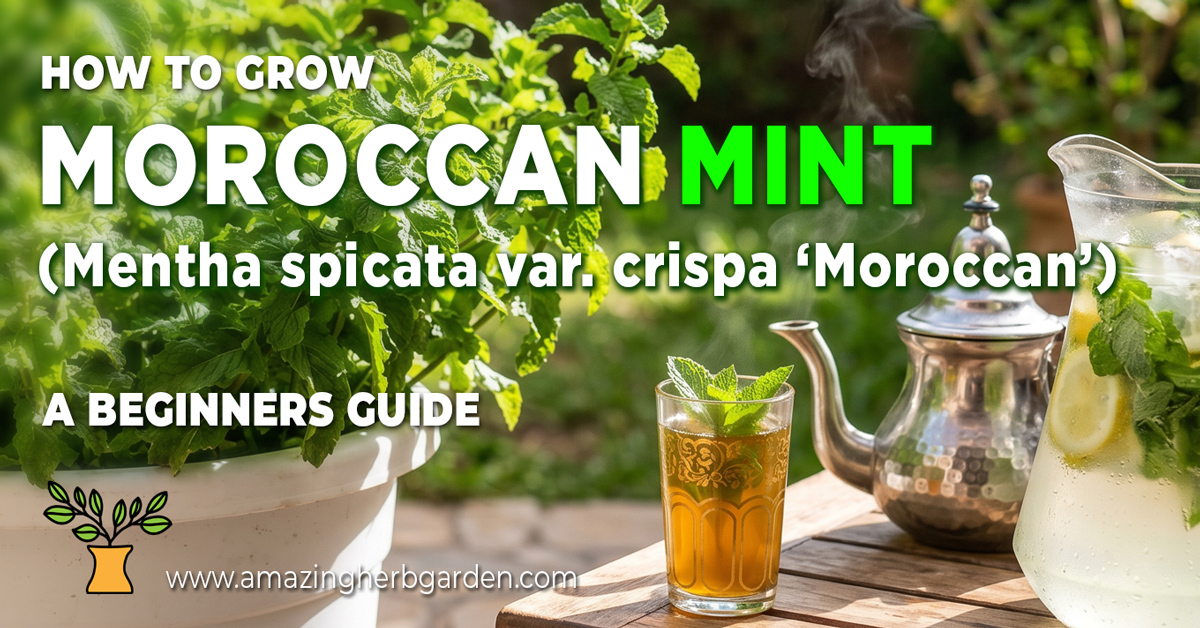
Everything genuinely worth knowing about Moroccan mint — including several things I couldn’t find repeated anywhere else while researching this. What it actually is botanically, the debate some growers have that most sites don’t mention, the tea culture and history behind the name, why mine is thriving somewhere you might not expect, and how to grow your own.
The short answer: Moroccan mint (Mentha spicata var. crispa ‘Moroccan’, sometimes called nana mint) isn’t a separate mint species; it’s a specific curly-leaved cultivar of ordinary spearmint, prized for a sweeter, milder flavour than standard spearmint and famous worldwide as the mint in Maghrebi (North African) mint tea. It grows exactly the way you’d hope: easily, in a container, tolerating everything from partial shade to full sun. Mine has been genuinely thriving in half shade, (here in Rome) on my terrace, which — reassuringly — turns out to match what the growing guides say, not to contradict them.
In this guide
- What is Moroccan mint, really?
- The “nana vs Moroccan mint” debate almost nobody mentions
- Names, nicknames and the words worth knowing
- Why “Moroccan”? The tea culture behind the name
- A history most growing guides leave out entirely
- The proverb of the three glasses
- How to identify it: leaves, flavour and flowers
- How the tea itself changes with the seasons
- How to grow it (and why mine loves half shade)
- Propagation
- Harvesting and using the leaves
- Moroccan mint vs plain spearmint vs peppermint
- Is it safe? For people and pets
- FAQ
What is Moroccan mint, really?
Here’s the detail most casual write-ups skip: Moroccan mint is not its own species. Botanically, it’s Mentha spicata var. crispa ‘Moroccan’ — a specific cultivated variety of ordinary spearmint (Mentha spicata), distinguished mainly by its crinkled, curly leaves (that’s what “crispa” means) and a noticeably sweeter, milder flavour than standard spearmint.
It’s an upright, rhizomatous perennial, typically growing 30–100 cm tall, with lance-shaped to oval leaves 5–9 cm long, a square stem (the Lamiaceae family’s signature), and flower spikes 4–11 cm long carrying tiny pale pink to pinkish-purple flowers, each with four equal-length stamens — the kind of precise botanical detail that rarely makes it into a typical grower’s blog post but is genuinely useful if you ever want to be certain of what you’re looking at.
🔗 Part of my full mint growing guide: Growing Mint Hub.
The “nana vs Moroccan mint” debate almost nobody mentions
This is the genuinely obscure part, and I want to flag it honestly rather than pretend it’s settled, because most sites simply treat “nana” and “Moroccan mint” as identical, full stop.
Digging into it properly, I found at least one detailed, well-researched source pointing to a finer distinction some growers and translators actually draw: a possible difference between Mentha spicata var. crispa ‘Morocco’ (specifically North African) and Mentha spicata var. crispa ‘Nana’ (said by some to originate in Asia Minor, and used across Iran, Turkey and the wider Arab world) — two closely related cultivars that, in this telling, both get folded into the same “nana”/”Moroccan mint” label in everyday use and in most retail packaging.
I want to be careful here: this isn’t a distinction I can find broadly confirmed across authoritative botanical databases, and plenty of equally serious sources use “nana” and “Moroccan mint” as straightforward synonyms. So take this as a genuinely interesting rabbit hole rather than an established fact — but it’s a good reminder that even a plant as famous and widely grown as this one hasn’t entirely escaped the naming tangles that run through this whole mint hub. If your own “nana” mint tastes or looks slightly different from someone else’s “Moroccan mint,” this might be part of why.
Names, nicknames and the words worth knowing
A few linguistic details I found genuinely interesting, and that add real texture if you’re growing this plant rather than just reading about it:
- “Nana” simply means “mint” in both Arabic and Hebrew — it isn’t this cultivar’s exclusive name, it’s the generic word for mint in those languages, applied here to one particularly beloved cultivar.
- “Atay” (or “shai”/”shay”) is Moroccan Arabic for tea — so the full traditional name is sometimes given as atay b’naanaa or shay-b’naanaa, literally “tea with mint.”
- The traditional teapot is called a berrad, typically metal (often silver), with the distinctively long spout that enables the high pour used to raise foam.
- Playful nicknames exist too — Moroccan mint tea is sometimes affectionately called “Moroccan whiskey” or “Berber whiskey”, a wry nod to how central it is to daily social life, standing in for alcohol in a culture where it isn’t part of the social ritual the way tea is.
Why “Moroccan”? The tea culture behind the name
This is genuinely the most interesting part of this plant’s story, and it’s worth knowing even if you never make the tea yourself.
Maghrebi mint tea — green tea, fresh spearmint (specifically this cultivar), and a generous amount of sugar — is Morocco’s defining national drink. Tea itself reached Morocco through European trade in the 18th century, and by the mid-19th century it had fused with Morocco’s existing tradition of mint infusions into the tea culture recognised worldwide today. It spread from there across the wider Maghreb — Algeria, Tunisia, Libya, Mauritania — and into the Sahel and among Tuareg communities of the Sahara.
The preparation itself is genuinely ceremonial, not casual:
- Green gunpowder tea (tightly rolled green tea leaves, named for their resemblance to gunpowder pellets) is rinsed briefly, then steeped with a generous handful of fresh mint and a substantial amount of sugar.
- Tea is traditionally poured from a considerable height — often at least half a metre — specifically to aerate it and raise a layer of foam on top, considered a sign the tea has been made properly.
- It’s served in small glasses (keesan) from the long-spouted berrad, on a tray, typically by the male head of the household — and in Moroccan culture, refusing a glass when offered is considered genuinely impolite.
A history most growing guides leave out entirely
The horticultural side of this plant is simple. Its human history is not, and I think it’s worth telling properly rather than reducing to “it’s popular in Morocco”:
- A specific person is credited as the first official “master of tea.” During the reign of Sultan Suleiman (1792–1822), an officer named Ahmed Bin Mubarek reportedly became the first mūl atay (“master of tea”) in the royal court — tea had, by then, become genuinely associated with power and prestige, not just refreshment.
- A war on the other side of the world reshaped Moroccan tea-drinking. In the twenty years following the 1856 Anglo-Moroccan Treaty, and after the British East India Company diverted tea shipments originally bound for the Baltic states during the Crimean War, tea imports into Morocco reportedly quadrupled — a striking example of how a European conflict thousands of miles away accelerated a North African cultural tradition.
- Sugar and tea both arrived by sea, through a specific port. Historian Helen Saberi traces much of this trade through Essaouira, where Jewish merchants who’d begun settling in Moroccan coastal cities in the 19th century managed the onward passage of goods into the interior.
- Not everyone welcomed it. In the late 19th century, Sufi orders led by figures such as Muhammad Bin Abdul-Kabir Al-Kattani actually urged their followers to boycott tea and sugar as European imports — a detail that complicates the neat “tea as timeless tradition” story most casual articles tell.
- It shows up in Moroccan music, too. One of the best-known songs by the Moroccan group Nass El Ghiwane, Es-Siniya (“The Tray”), uses the tea tray itself as a metaphor for the hardships of leaving the countryside for a big city like Casablanca — a genuinely unexpected place to find this plant’s cultural footprint.
- There’s an older, contested origin story too. Some accounts credit the 14th-century Moroccan traveller Ibn Battuta with first bringing tea to Morocco, centuries before the more solidly documented 18th-century European trade route — an interesting claim, though one I’d treat as folklore layered on top of the better-evidenced history rather than settled fact.
The proverb of the three glasses
Moroccan mint tea is traditionally poured and drunk in three successive glasses from the same pot, and there’s a well-known saying traditionally recited to explain why — something along these lines:
“The first glass is as bitter as life, the second glass is as strong as love, the third glass is as gentle as death.”
I’ll be upfront that you’ll find this proverb quoted with the adjectives shuffled slightly depending on the source (some versions swap “bitter” and “gentle” between the first and third glass) — exactly what you’d expect from an oral proverb passed down rather than a single fixed text. Whichever version you hear, the idea is the same: each of the three steepings tastes subtly different, and the ritual of drinking all three is treated as a small reflection on life itself.
How to identify Moroccan mint: leaves, flavour and flowers
If you want to be sure what you’ve actually got (a habit I’d encourage with any mint, given everything else in this hub):
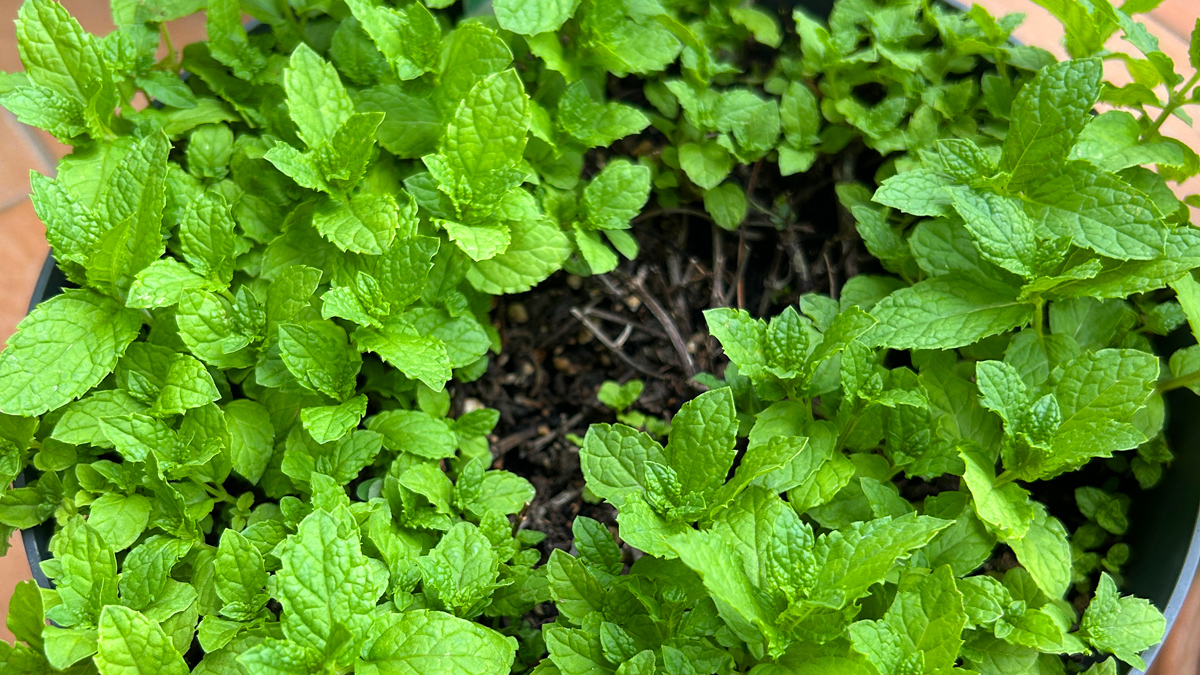
- Leaves: bright green, distinctly crinkled or curly in texture — this is the single most obvious visual tell, and the source of its botanical name (crispa = curly). Toothed edges, like most true mints.
- Flavour: a sweeter, milder version of standard spearmint’s flavour — noticeably softer and less sharp, which is exactly why it suits a sugar-heavy tea so well.
- Flowers: tiny pale pink to pinkish-purple flowers held in slender terminal spikes at the tips of the stems in summer — the same reassuring “true mint” flower pattern you’ll recognise from my menta romana piece, and nothing like pennyroyal’s stem-hugging whorls.
- Growth habit: upright, bushy, spreading by creeping rhizomes exactly like every other mint in my collection.
How the tea itself changes with the seasons
Something I didn’t expect to find: the recipe for this tea isn’t fixed even within Morocco itself. It’s traditionally perfumed and adjusted depending on the season:
- In warmer months, it’s sometimes lifted with orange blossom water or other fragrant flowers.
- In colder months, Moroccan households traditionally add warming herbs — marjoram, sage, verbena (lwiza, prized for adding a lemony note), and even wormwood.
- Other spearmint relatives, including yerba buena, are occasionally used as substitutes for nana mint itself when it isn’t available.
That’s a genuinely useful thing to know if you’re growing this plant specifically to make the tea — the “correct” version isn’t one fixed recipe, it’s a tradition that flexes with the calendar.
How to grow Moroccan mint (and why mine loves half shade)
The genuinely good news: it grows exactly as easily as any other mint, with one small quirk worth knowing.
- Light: tolerates partial shade through to full sun — which is precisely why mine has been thriving in half shade on my terrace. If your Moroccan mint is in a similar spot and doing well, that’s not an exception to normal mint advice — it’s this cultivar behaving exactly as it should.
- Soil: free-draining but moisture-retentive, loamy compost rich in organic matter, same principle as every mint I grow.
- Water: keep it consistently, lightly moist — finger-test at 2–3 cm depth, water when dry at that depth.
- One genuine quirk: the RHS specifically notes this cultivar is somewhat less cold-hardy than many other mints. If you’re somewhere with harder winters than my Rome terrace, give it a bit more winter protection than you might a bulletproof variety like spearmint or peppermint.
- Containment: like every mint, it spreads by rhizomes and will happily take over a bed given the chance — a pot is the right home for it.
- One detail worth knowing before you harvest for tea: the leaves reportedly lose much of their aromatic scent once the plant has flowered — worth bearing in mind if you’re growing this specifically to brew with, rather than just to look at.
For the full step-by-step on potting, feeding, and troubleshooting, see my complete beginner’s guide to growing mint in pots — everything there applies here too, aside from the shade tolerance and winter-hardiness notes above.
Propagation
Cuttings and division work exactly as they do for every mint I grow:
- Take an 8–10 cm (3–4 in) non-flowering cutting, just below a leaf node.
- Strip the lower leaves, then root it in a glass of water on a bright windowsill (changing the water every couple of days), or push it straight into moist compost.
- Roots typically appear within one to two weeks.
- Alternatively, divide an established plant’s rootball every year or two to refresh it and make more plants at the same time.
Harvesting and using the leaves
Pinch growing tips rather than stripping individual leaves, harvest in the morning when the oils are most concentrated, and never take more than about a third of the plant at once — the same rule that applies across every mint here. Leaves can also be dried, frozen, or preserved in salt, sugar, syrup, alcohol or oil if you want to keep a harvest beyond the fresh season.
Given its genuinely sweeter, milder flavour, Moroccan mint particularly suits:
- Mint tea, obviously — traditionally with green gunpowder tea and a generous amount of sugar, and optionally perfumed to match the season as above.
- Fresh in salads and tabbouleh-style dishes, where its softer flavour is less likely to overpower.
- Infused water and lemonade — its mildness makes it a pleasant, less punchy alternative to peppermint for this.
Moroccan mint vs plain spearmint vs peppermint
| Moroccan mint | Plain spearmint | Peppermint | |
|---|---|---|---|
| Botanically | Mentha spicata var. crispa ‘Moroccan’ | Mentha spicata | Mentha × piperita |
| Leaf texture | Distinctly crinkled/curly | Flatter, less curled | Smooth, often darker green |
| Flavour | Sweeter, milder | Classic bright, clean mint | Strong, sharp, high menthol |
| Best known for | Maghrebi mint tea | All-purpose cooking, sauces | Tea, sweets, strong infusions |
| Cold hardiness | Slightly less hardy | Very hardy | Very hardy |
| Shade tolerance | Partial shade to full sun | Similar | Similar |
Is Moroccan mint safe? For people and pets
This is general, educational information, not medical advice.
For people: yes — it’s a genuine culinary mint (a spearmint cultivar), safe to use freely in cooking and tea in ordinary amounts. Traditional and folk medicine attributes many additional properties to spearmint generally, but I’m sticking to the gardening and culinary side here rather than making health claims — check with your doctor if you’re pregnant, breastfeeding, or managing a health condition.
For pets: as with other true mints, the essential oils in mint leaves are worth keeping pets from eating in quantity — a curious nibble is unlikely to cause harm, but concentrated mint oil should never be given to or applied on a pet.
Frequently asked questions
Is Moroccan mint a different species from spearmint?
No — it’s a specific curly-leaved cultivar of ordinary spearmint (Mentha spicata var. crispa ‘Moroccan’), not a separate species.
Is Moroccan mint the same thing as nana mint?
Almost always treated as synonyms, and used interchangeably in nearly every source — though a handful of more detailed accounts draw a finer, disputed distinction between “Moroccan” and “Nana” as related but separate cultivars. Not something I’d treat as settled, but worth knowing exists.
Why is it called Moroccan mint if it’s really spearmint?
Because of its central role in Maghrebi mint tea, a tradition so strongly associated with Morocco that the plant itself picked up the country’s name.
Does Moroccan mint need full sun?
No — it tolerates partial shade through to full sun, which is why it can genuinely thrive in a half-shaded spot, as mine has.
Is Moroccan mint hardier or less hardy than other mints?
Slightly less hardy than many other mint varieties, per the RHS — worth a little extra winter protection in colder climates than you might give a tougher variety like plain spearmint.
Can I use Moroccan mint the same way as regular spearmint?
Yes, in any recipe — its main practical difference is a sweeter, milder flavour, which is exactly why it suits a sugar-heavy tea so well.
Over to you
If you’re growing Moroccan mint yourself, I’d love to know: full sun, partial shade, or somewhere in between — and has it made it into your own cup of tea yet? Tell me in the comments, and if you haven’t tried the real three-glass ritual, it’s a genuinely lovely way to actually taste what this plant is famous for.
Keep growing (links to more interesting stuff)
- Growing Mint: Everything I’ve Learned — the full mint hub, every variety and guide in one place.
- How to Grow Mint in Pots: The Complete Beginner’s Guide — the practical how-to this page builds on.
- Start Your Herb Garden with Spearmint — the plain version of the same species this cultivar comes from.
- Menta Romana: Is It Pennyroyal, and Is It Safe to Eat? — the flower-spike identification method referenced above.