
Why Is My Basil Flowering? (And Exactly What to Do About It)
If your basil has started pushing up little flower buds at the top, here’s the short answer: pinch them off, right above a pair of leaves, and keep doing it every few days. That keeps your plant growing leaves instead of seeds — which is exactly what you want.
I get asked about this all the time. Just this week a reader told me their basil cuttings were rooting nicely, but the tops were already trying to flower — should they cut the flowers off? The answer is yes, and in this post I’ll show you exactly how, why it happens, and how to keep your basil leafy, bushy and productive all season long.
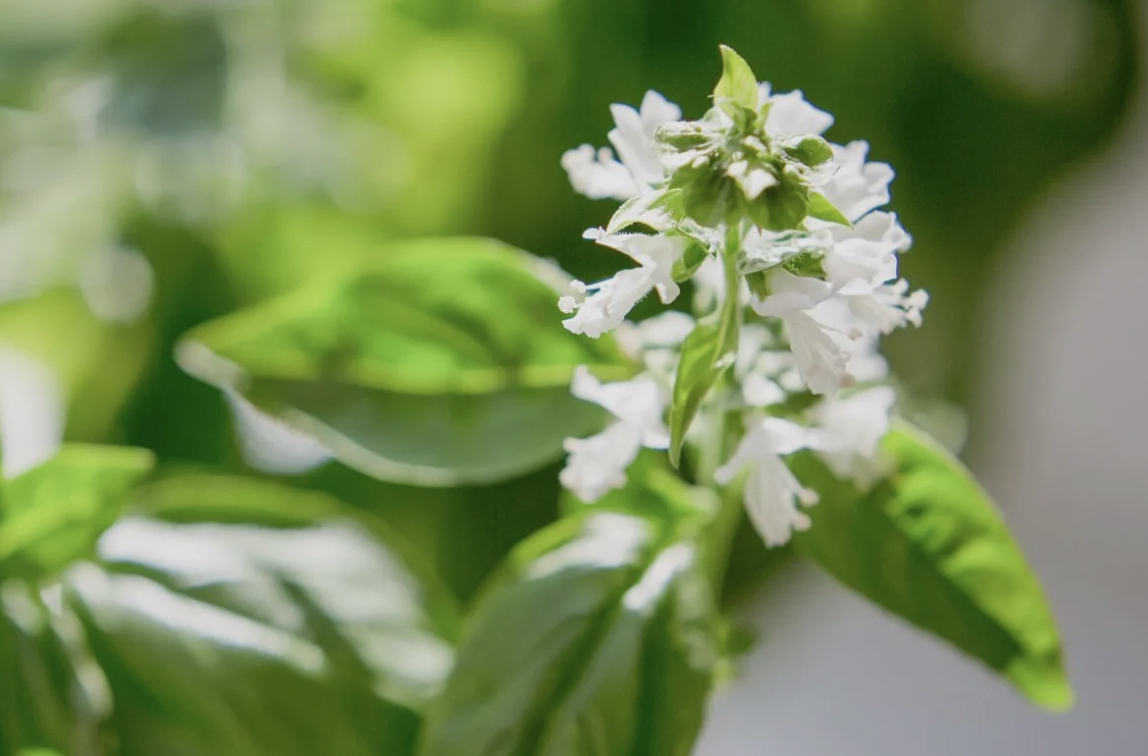
What’s actually happening when basil flowers
When basil starts making flower buds, gardeners call it bolting. It’s completely normal — it’s just the plant doing what nature designed it to do.
Basil is an annual, which means it lives for a single growing season. Its whole goal in life is to grow, flower, set seed, and pass itself on. So when conditions tell the plant it’s time — usually warm weather, long summer days, or a bit of stress — it switches gears. Instead of putting energy into new leaves, it starts making flowers.
The problem for us is simple: we grow basil for the leaves, not the seeds. Once a plant commits to flowering, two things tend to happen. Growth slows down, and the leaves can take on a more bitter, less sweet flavour. Neither is what you want from a plant you’re picking for the kitchen.
The good news is that bolting isn’t a disaster, and it’s easy to stay ahead of. You just need to catch it early and pinch.
Should you cut the basil flowers off? Yes — here’s why
If your aim is leaves, then yes — remove the flower buds as soon as you spot them. Every flower the plant makes is energy it isn’t putting into the leafy growth you actually want. By pinching the buds off, you redirect that energy straight back into the plant, keeping it growing and keeping the leaves tasting good.
This is one of those rare jobs in gardening that takes seconds and genuinely makes a difference.
How to pinch basil flowers off — step by step
- Find the buds. Look at the top of each stem. Bolting starts as small clusters of tight green buds, which then open into little white or purple flowers. Catch them at the bud stage if you can.
- Pinch just above a pair of leaves. Follow the flowering stem down until you reach a healthy pair of leaves. Pinch or snip the stem just above them. You can use your fingers, or clean scissors if you prefer a tidy cut.
- Don’t be shy. It can feel wrong to cut a chunk off your plant, but basil loves it. Removing the top growth is exactly what encourages a fuller plant (more on that next).
- Repeat every few days. Basil is persistent — it will try again, especially in hot weather. A quick once-over every few days keeps you ahead of it.
That’s the whole job. No special tools, no fuss.
The bonus: pinching gives you bushier basil
Here’s the part beginners love once they realise it. When you pinch a basil stem just above a pair of leaves, the plant doesn’t just stop there — it sends out two new shoots from that point. Pinch each of those later, and they each split into two again.
So pinching off flowers isn’t only damage control. It’s the single best way to turn a tall, leggy, one-stemmed basil plant into a full, bushy one that gives you far more leaves to harvest. The same pinch that stops flowering also makes your plant bigger and more productive. It’s a two-for-one.
This is why regular harvesting and regular pinching go hand in hand — the more you (gently) pick and pinch from the top, the better basil grows.
Special case: cuttings that are still rooting
This is exactly the situation that reader was in, and it’s worth a note of its own. If you’re rooting basil cuttings and they start trying to flower before they’ve made proper roots, pinch those buds off straight away.
A young cutting only has so much energy. You want every bit of it going into making roots, not flowers. Removing the buds keeps the plant focused on getting established. Don’t worry if your cutting had a go at flowering before you caught it — it’ll keep rooting happily once you’ve pinched the buds out.
What if my basil has already flowered a lot?
Don’t panic, it’s usually rescuable. Pinch off all the flower heads and the stems that bore them, cutting back to a healthy pair of leaves lower down. The plant will often push out fresh, leafy growth again, especially earlier in the season when there’s still plenty of warmth and light ahead.
If the leaves taste a little bitter after flowering, that flavour usually improves as new growth comes through. Late in the season, when the plant is tired and the weather’s turning, you may simply choose to let it finish its run — and that’s fine too.
Is it ever okay to let basil flower?
Honestly, sometimes — and it’s worth knowing your options rather than treating flowering as purely the enemy.
- For the bees. Basil flowers are loved by pollinators. At the end of the season, when I’m no longer relying on the plant for leaves, I’ll often let one or two flower to give the bees a treat.
- For seeds. If you want to save seed for next year, you’ll need to let some flowers form, finish and dry out.
- The flowers are edible. Basil flowers are perfectly edible, with a milder version of the leaf flavour. They’re lovely scattered over a salad or a pizza.
So the rule isn’t “flowers are bad” — it’s “flowers are bad when you want maximum leaves.” For most of the season, pinch them off. When you’re winding down, feel free to let the plant do its thing.
Common mistakes to avoid
- Letting it flower “just for a bit.” The buds can look pretty, so it’s tempting to leave them. But once basil commits to flowering, the leaves turn bitter and growth slows — and it’s harder to bring back. Pinch early.
- Letting the plant get stressed. Heat, drought and being pot-bound all push basil to bolt faster. Keep it watered and don’t let it dry out in hot spells.
- Never harvesting. A basil plant you never pick from will grow tall, leggy and quick to flower. Regular gentle harvesting keeps it bushy and delays bolting.
- Pinching in the wrong place. Always pinch just above a pair of leaves, not in the middle of a bare stem — that’s where the new shoots come from.
Keep your basil leafy all season
It really comes down to one small habit. Every few days, run your eye over your basil and pinch off anything that’s trying to flower, cutting back to a healthy pair of leaves. Keep it watered, keep harvesting from the top, and you’ll have sweet, bushy, productive basil right through the summer.
For more on keeping basil happy — yellowing leaves, wilting, leggy growth and the rest — have a look at my basil troubleshooting guide, or browse all my basil growing guides to get the most from your plants.
If this helped, I’d love to hear how your basil’s doing — leave a comment below and let me know.
FAQ
Should I cut the flowers off my basil? Yes, if you want leaves. Pinch the flower buds off just above a pair of leaves as soon as you spot them. This keeps the plant producing tasty leaves instead of putting its energy into seeds.
Why is my basil flowering so early? Usually because of warm weather, long summer days, or stress such as drought or being pot-bound. Keeping basil well watered, regularly harvested and not too crowded helps delay flowering.
Can you still eat basil after it flowers? Yes. The leaves are still safe to eat, though they can taste a little more bitter once the plant has flowered. Pinching the flowers off and encouraging fresh growth usually restores a sweeter flavour. The flowers themselves are edible too.
Will basil grow back after I cut the flowers off? Yes. Pinching above a pair of leaves encourages two new shoots to grow from that point, so the plant comes back bushier and leafier than before.
Does cutting basil flowers make the plant bushier? It does. Pinching just above a leaf pair triggers branching, so each pinch turns one stem into two — giving you a fuller plant and more leaves over time.
Click here to add your own text
Click here to add your own text
