
How to Grow Mojito Mint (Mentha × villosa) — A Beginner’s Guide
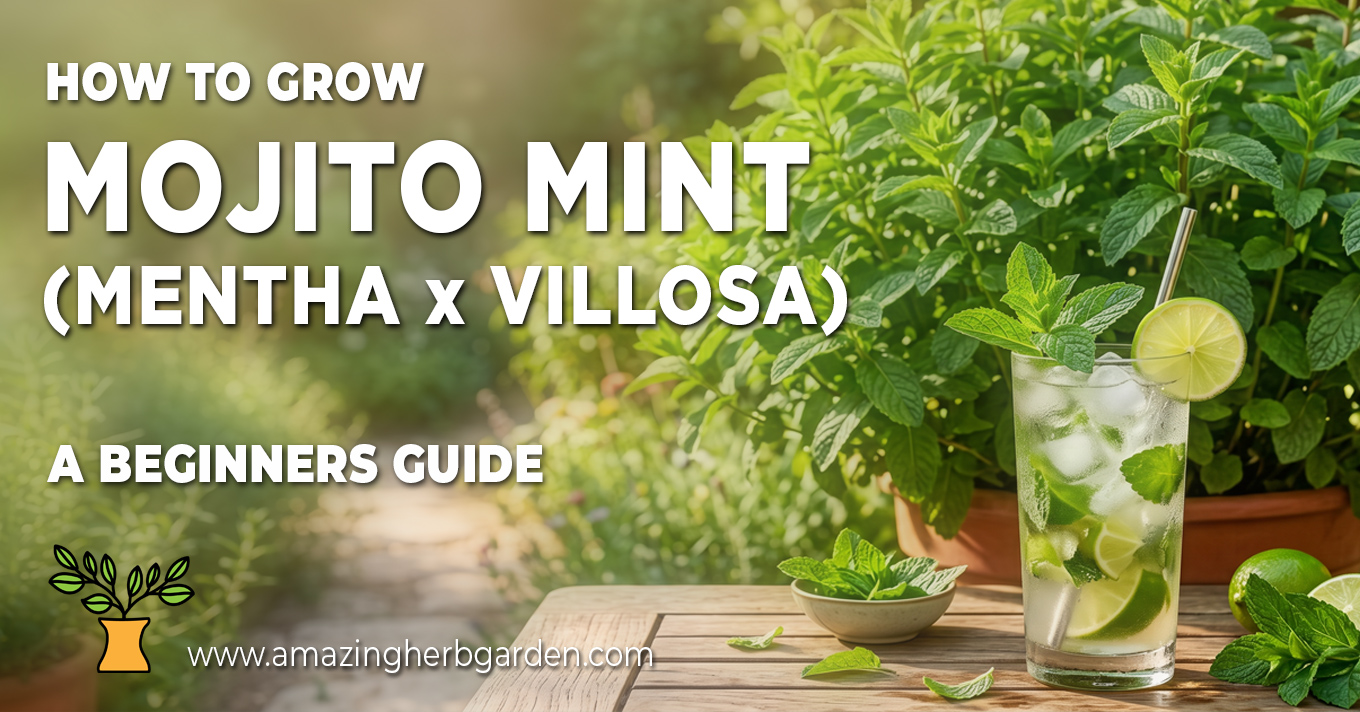
Mojito mint (Mentha × villosa): the complete growing guide
If you want to make a properly authentic mojito, this is the mint you’re after — and there’s a surprising amount of confusion around it, so I set out to make this the clearest, most accurate guide to mojito mint you’ll find. I’m growing it myself this summer here in Italy, and I’ve checked the botany carefully, because a lot of what’s written about this plant online is muddled or simply wrong.
Here’s the honest, complete picture: what mojito mint actually is, how to tell it apart from ordinary spearmint, how to grow and harvest it, and why — despite what some sellers suggest — you can’t reliably grow it from seed.
Quick answer: Mojito mint is Mentha × villosa, a sterile hybrid of spearmint and apple mint with a milder, citrusy flavour that’s prized for authentic mojitos. Grow it like any mint — full sun to part shade, steady moisture, and always in a pot to stop it taking over — and propagate it from cuttings or division, never seed.
What mojito mint actually is
Mojito mint is the variety traditionally muddled into a Cuban mojito, where it’s known as yerba buena. Botanically it’s Mentha × villosa, a hybrid of Mentha spicata (spearmint) and Mentha suaveolens (apple mint), also called large apple mint, foxtail mint or hairy mint.
That apple-mint parentage is the key to its flavour. Compared with spearmint, it has a milder profile — a refreshing mintiness with hints of citrus and a subtle apple note inherited from its parent species — which makes it especially suited to fresh culinary use where you want a delicate, not overpowering, mint. In a mojito that matters: it lifts the lime and rum rather than bulldozing them.
One thing to settle straight away, because nursery labels muddle it: mojito mint is sometimes loosely called “a type of spearmint.” That’s not quite right. Spearmint is one of its parents; mojito mint is a distinct hybrid in its own right.
Why you can’t grow mojito mint from seed (an important honest point)
This is where I have to correct a myth that even some seed sellers repeat. You’ll occasionally see “mojito mint seeds” for sale — but the plant is a sterile hybrid. Botanical records are clear on this: Mentha × villosa is a completely sterile hybrid between spearmint and round-leaved (apple) mint. As a hybrid, seed viability is often low or absent, so it relies on vegetative means for propagation.
In plain terms: any seed you’re sold as “mojito mint” either won’t germinate, or won’t grow into true mojito mint. The only reliable way to get the real plant is from a cutting or division of an existing mojito mint plant — which, happily, is easy. So if you see mojito mint seeds online, save your money and buy a plant or a cutting instead.
Mojito mint vs spearmint: how to tell them apart
This is the question almost everyone asks, so let’s settle it honestly.
Flavour. Mojito mint is slightly milder and smoother; spearmint has a stronger, more classic, sharper mint taste. The difference is real but subtle — and here’s the honest part most “authentic mojito” articles won’t tell you: in most drinks and recipes the two can be used interchangeably, and once muddled into a cocktail the difference becomes quite subtle. Spearmint is the substitute the world reaches for, and it makes a perfectly good mojito.
Appearance. Up close there are clues. Mojito mint tends to have softer, slightly fuzzy (hairy) leaves, and its flowers can show purple tones while spearmint leans toward white. The “hairy” leaf is a giveaway — it’s why one of its other names is hairy mint.
The honest verdict. If you specifically want to grow one plant for authentic mojitos, get true mojito mint — it’s a lovely, mild, citrusy thing and worth having. But if you already grow spearmint, or mojito mint is hard to find, don’t lose sleep: spearmint is the classic, widely available stand-in and makes an excellent mojito. What you should avoid for a mojito is peppermint — its high menthol content overpowers the drink. When you’re buying, the surest test is your nose: rub a leaf, and true mojito mint smells sweet and faintly fruity rather than sharp and icy.
A quick word on the naming confusion
Mint names are a genuine mess, and I’d rather be straight with you than pretend otherwise. The whole Mentha genus hybridises freely, which makes it taxonomically difficult, with many cultivated variants and overlapping names. You’ll find mojito mint sold as Cuban mint, hairy mint, yerba buena, large apple mint, and occasionally tangled up with Mentha nemorosa or apple mint itself. If you’ve bought a plant clearly labelled “mojito mint,” you almost certainly have Mentha × villosa. But don’t be thrown if the same plant turns up under two or three names — and when in doubt, trust the sniff-and-taste test over the label.
How to grow mojito mint
The good news after all that botany: growing it is genuinely easy. It behaves like its cousins — vigorous, generous, and a bit of a thug.
Always grow it in a pot. This is the single most important rule. Mint spreads relentlessly by underground runners, and when planted in the ground the spreading branches root wherever they touch the soil. I grow all my mint in containers. If you want it in a border, sink the whole pot into the ground so the rim sits just proud of the surface — that keeps the runners contained.
Light. It’s happy in full sun or partial shade — and it’s genuinely relaxed about it. In a shadier spot it grows a little more slowly but still does perfectly well, which makes it a forgiving choice if you don’t have a sun-drenched windowsill. Here in the Italian summer I give mine morning sun with a little afternoon shade, which keeps it lush rather than scorched.
Water. This is where mojito mint differs from most of the Mediterranean herbs I grow. Where rosemary, thyme and sage want sharp drainage and a chance to dry out, mojito mint is the opposite — it likes consistently moisture-retentive conditions and really doesn’t want to dry out. Keep the compost evenly moist but never waterlogged. A practical rule: water the container when the top 2–3 cm (about an inch) of soil are dry — and in a heatwave a pot may need it daily. Plastic pots hold moisture longer than terracotta and make this easier.
Soil. It isn’t fussy. A fertile, humus-rich, well-drained mix is ideal, and a soil-based potting compost with a little added perlite for drainage works well.
Feeding. Go easy. A slow-release feed in spring is enough; mint grows so freely that overfeeding just gives you floppy, less flavoursome growth.
Size and habit. Expect a plant roughly 2 feet (about 60 cm) tall, spreading 2–3 feet, with a strong, vigorous root system that wants room.
Hardiness and overwintering. Mojito mint is a hardy perennial — generally reliable in USDA zones 6–9, and easily grown as an annual in colder areas. It dies back to the crown each winter and regrows from the base in spring, so take care not to disturb the crown in late winter when it’s not visible. In a mild Mediterranean spot like mine it barely pauses. One tip worth knowing: mint grown in a pot gets crowded and root-bound over time, which is why many people think it’s died over winter when really it just needs dividing — so lift and split it every couple of years to keep it vigorous.
How to harvest for the best flavour
Harvest the leaves from late spring to early autumn, taking the young, tender shoots — they’re the most aromatic. Try not to take more than about half the foliage at once, so the plant keeps producing, and harvest in the morning, when the oils in the leaves are at their most concentrated.
The single best thing you can do for flavour is keep pinching out the tips and removing flower buds. Removing flower buds as they appear keeps the plant’s energy in the leaves rather than the flowers, and mint leaves are at their most fragrant before it blooms. So harvest hard through summer — it’s good for the plant and good for your mojitos.
Storing it
Fresh is best, picked just before you need it. But you’ve got options for a glut: the leaves freeze well in ice cubes, ready to drop into drinks and desserts through winter, and they can also be dried — hang small bunches in a warm, dark, well-ventilated spot for one to two weeks. To keep cut sprigs fresh for a few days, trim the stems and stand them upright in a glass with an inch of water, loosely covered, in the fridge.
Growing more — from cuttings, not seed
Since seed is off the table, cuttings are your route, and mint makes it almost too easy. Snip a healthy, non-flowering stem, pop it in a glass of water on a bright windowsill, and you’ll usually see roots within a week or two — then pot it on. You can also simply divide an established clump. I’ve written up the full water-rooting method in my guide to rooting mint cuttings (link once published). One plant quickly becomes a whole row.
Using mojito mint
The obvious one is the mojito: muddle a good handful of fresh leaves with lime and sugar, add rum and soda. But the mild, citrusy flavour earns its place well beyond the cocktail — it’s lovely in teas and lemonades, in fruit salads and desserts, and as a fresh herb with meat dishes such as lamb. Pick it fresh, and tear or muddle gently to release the oils without bruising it bitter.
Frequently asked questions
Is mojito mint the same as spearmint? No, but they’re closely related. Mojito mint is a distinct variety with a slightly milder, smoother, more citrusy flavour, while spearmint is stronger and more classic. Spearmint is its parent, not the same plant — though the two can usually be used interchangeably in drinks.
Can you grow mojito mint from seed? No, not reliably. It’s a sterile hybrid, so seed is unviable or won’t come true. Buy a plant or take a cutting instead.
Is mojito mint a perennial? Yes. It’s a hardy perennial that dies back in winter and regrows from the base in spring, reliably so in milder climates and zones 6–9.
Why isn’t my mojito mint very minty? Usually because it’s flowering, root-bound, or starved of light. Keep pinching out flower buds, divide it every couple of years, and give it enough sun — flavour is strongest in young leaves on an actively growing plant.
Does mojito mint spread like other mint? Yes — vigorously, by underground runners. Always grow it in a container to keep it in bounds.
Over to you
That’s mojito mint properly covered — the real plant, honestly explained. It’s an easy, generous, fragrant herb with a genuine cocktail pedigree, and once you’ve got one plant you’ll never be short of it.
New to mint generally? Start with my mint growing guide. And to turn one plant into many, here’s how I root mint cuttings in water (link once published).
Growing mojito mint yourself? Tell me how you’re getting on in the comments — and whether you can taste the difference in your mojitos.