
Best Soil Mix for Rosemary (and how to make your own)
Quick answer: the best soil mix for rosemary
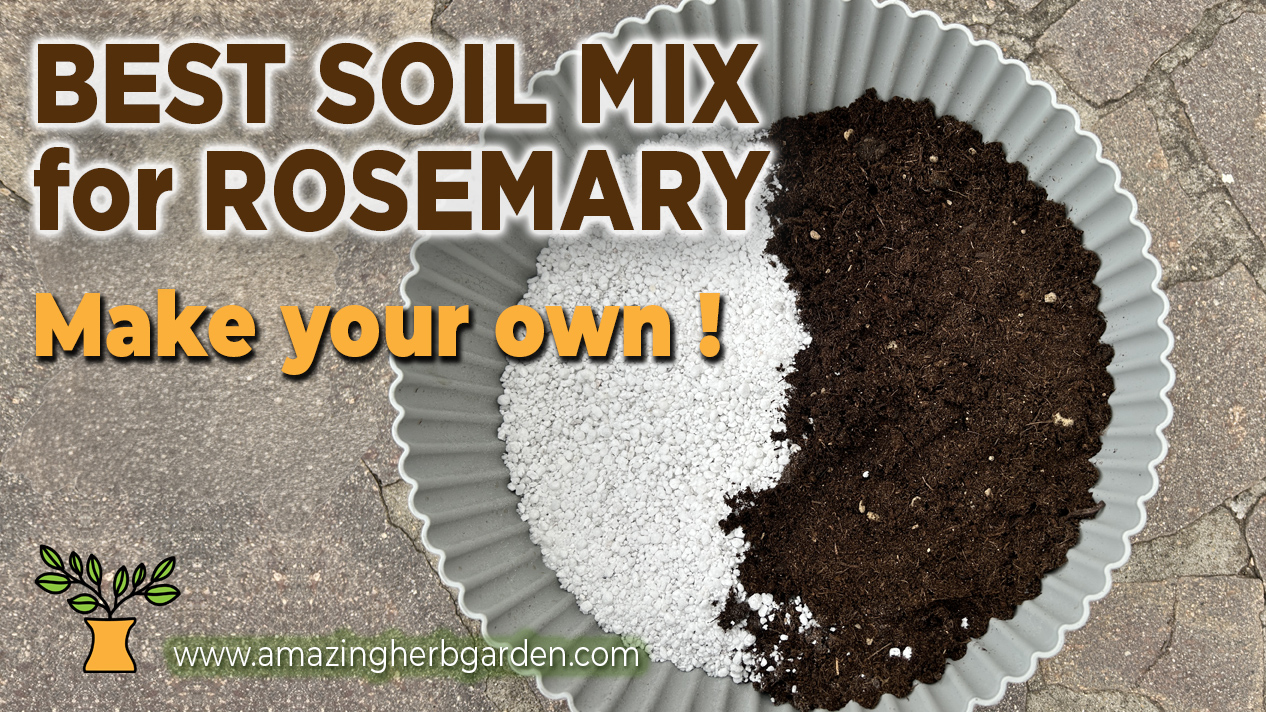
Use a fast-draining mix of roughly 2 parts compost or peat-free potting soil to 1 part perlite (or coarse grit/horticultural sand). That’s the ratio I use for all my Mediterranean herbs (rosemary, sage, thyme, oregano), because they all evolved in the same lean, free-draining conditions. It’s the opposite of what thirstier herbs like basil and mint prefer, which matters if you’re potting up more than one type of herb at once.
If you’ve potted rosemary the same way you would basil or mint, that’s very likely why it’s struggling. Rosemary comes from thin, stony Mediterranean hillsides where water drains away in minutes, not hours. Give it anything that holds onto moisture and you’re setting it up for root rot before it’s even had a chance to settle in.
Why rosemary needs this specific mix
Rosemary’s roots are used to oxygen, not standing water. In compact, moisture-holding soil, the tiny air pockets roots need to breathe collapse, and the roots start to suffocate and rot — even if you’re not technically overwatering by the calendar. The soil itself is often the real problem, not how often you’re reaching for the watering can.
This is also why two people can water rosemary on exactly the same schedule and get completely different results: one is growing it in a gritty, open mix where water passes straight through, and the other is growing it in dense, compost-heavy soil where water just sits around the roots.
How to make your own rosemary mix
- Start with a peat-free (or very low %) multi-purpose compost as your base
- Add perlite at roughly a 2:1 ratio (two parts compost to one part perlite) — perlite is the lightweight white grit that creates air pockets and lets water drain straight through.
- No perlite on hand? Coarse horticultural sand or fine grit works as a substitute, at the same rough ratio.
- Mix thoroughly before potting — you want the grit distributed evenly, not sitting in a layer at the bottom.
- Always use a pot with a drainage hole. Even the perfect mix will hold too much water in a container with nowhere for it to escape.
I can recommend :
What exactly is perlite?
Worth knowing what you’re actually buying, since “perlite” isn’t a very self-explanatory word on a bag.
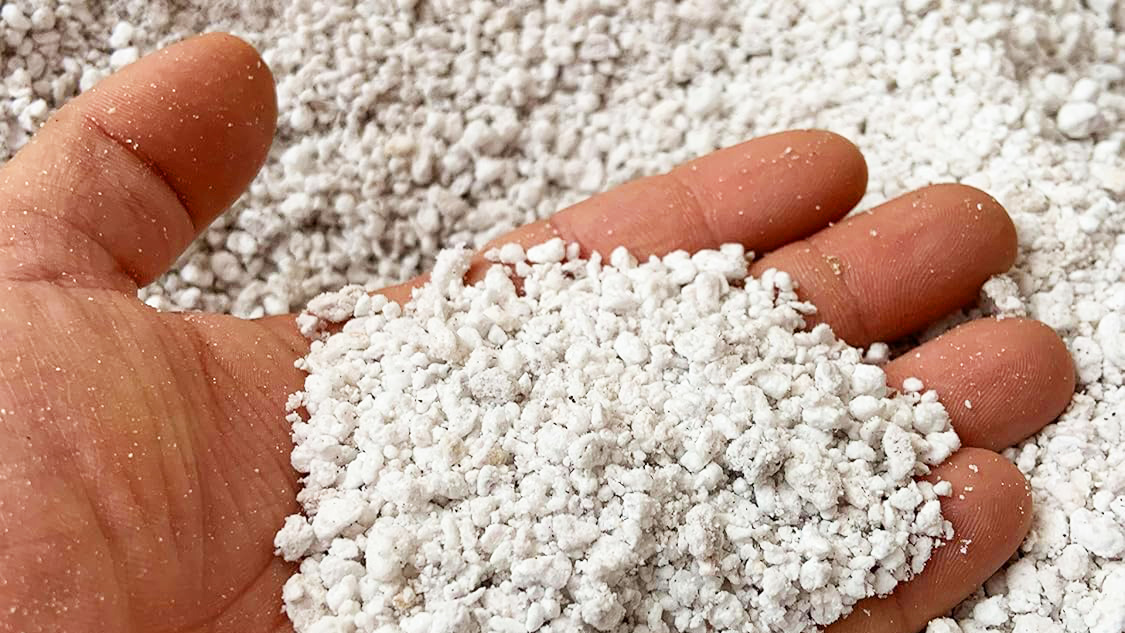
Perlite is a type of volcanic glass that’s heated to around 850–1,000°C (roughly 1,550–1,850°F) during manufacturing, which makes it puff up dramatically — similar to popcorn — into the light, white, porous granules you’ll see in the bag. That expansion is what gives it its structure: full of tiny air pockets, which is exactly what creates drainage and aeration in your soil mix.
A few practical things worth knowing:
- It’s chemically inert and pH neutral, so it won’t affect your compost’s acidity or feed the plant in any way — it’s purely structural, not nutritional.
- It doesn’t break down or decompose the way compost does, so it keeps doing its drainage job for years, even across repottings.
- It’s very lightweight, which is part of why it’s so widely used in pots and containers rather than heavier alternatives like sand.
- It can be dusty when dry. It’s a good habit to dampen it slightly before mixing, and it’s worth avoiding breathing in the dust when you first open a bag — a quick splash of water over it before mixing settles this down.
- Don’t substitute vermiculite for perlite in this recipe. The two often sit next to each other on the shelf and look superficially similar, but vermiculite holds significantly more water — the opposite of what you want for rosemary. Vermiculite is great for thirstier plants and seed-starting mixes, just not this job.
- Pumice is a reasonable substitute for perlite if that’s what’s available to you locally — it’s also volcanic, also inert, and drains similarly well, just slightly heavier.
Why peat-free, specifically?
You’ll notice I specify peat-free compost as the base, not just “compost.” That’s not a fussy detail — it’s worth understanding why.
Peat comes from peat bogs: wetland habitats that store carbon and take centuries to form. Extracting peat drains and damages those bogs, releases the carbon they’ve stored for a very long time, and destroys habitat that doesn’t come back on any timescale that matters to us. It’s also, practically speaking, a finite resource — once a bog is dug up, it’s gone.
This has real regulatory momentum behind it too: the UK has already banned bagged peat compost for home gardeners, with further restrictions on professional peat use following. If you’re in the UK, you may find peat-containing composts harder to buy at all before long. If you’re elsewhere, the environmental case still stands even without a law behind it — it’s simply a better default.
The good news is that peat-free composts have improved hugely in recent years and work perfectly well for rosemary once you understand one quirk: they tend to dry out differently to peat-based mixes. Peat-free compost can look dry on the surface while still holding moisture lower down, so don’t assume it needs watering just because the top looks pale and crumbly — check a couple of centimetres down, the same way you should with any potting mix.
What about coconut coir as a peat alternative?
Coconut coir (sometimes sold as “coco coir” or “coco peat”) is one of the most common peat substitutes, made from the fibrous husk of coconuts — a byproduct of the coconut industry rather than something extracted from a slow-forming habitat, which is what makes it appealing as a replacement.
For rosemary specifically, though, coir on its own isn’t automatically the right swap. Coir holds water well — often too well for a plant that wants to dry out between waterings — and it can compact over time in a way that reduces the very air pockets rosemary’s roots depend on. If you’re using a coir-based peat-free compost as your base, I’d actually go slightly heavier on the perlite or grit side of the ratio than the standard 2:1 — closer to equal parts compost and perlite — to counteract coir’s tendency to hold onto moisture.
Other common peat alternatives you’ll see on peat-free compost bags — composted bark, wood fibre, green waste — behave a bit more like traditional compost in terms of drainage, so the standard 2:1 ratio holds up well with those.
Buying a pre-mixed option instead
If you’d rather not mix your own, a pre-blended “cactus and Mediterranean herb” or “gritty” compost from the garden centre will do the same job — just check the bag mentions added grit or perlite, since a plain “herb compost” label doesn’t always guarantee it.
Signs your current mix is wrong for rosemary
- Soil stays damp for several days after watering, rather than drying within a day or two.
- Water pools on the surface instead of soaking straight through.
- Leaves and stems feel soft or floppy rather than firm — a common early sign of a mix that’s holding too much moisture (and worth checking against the fuller diagnosis in my Why Is My Rosemary Turning Brown guide if you’re already seeing browning).
Common mistakes I see (and have made myself)
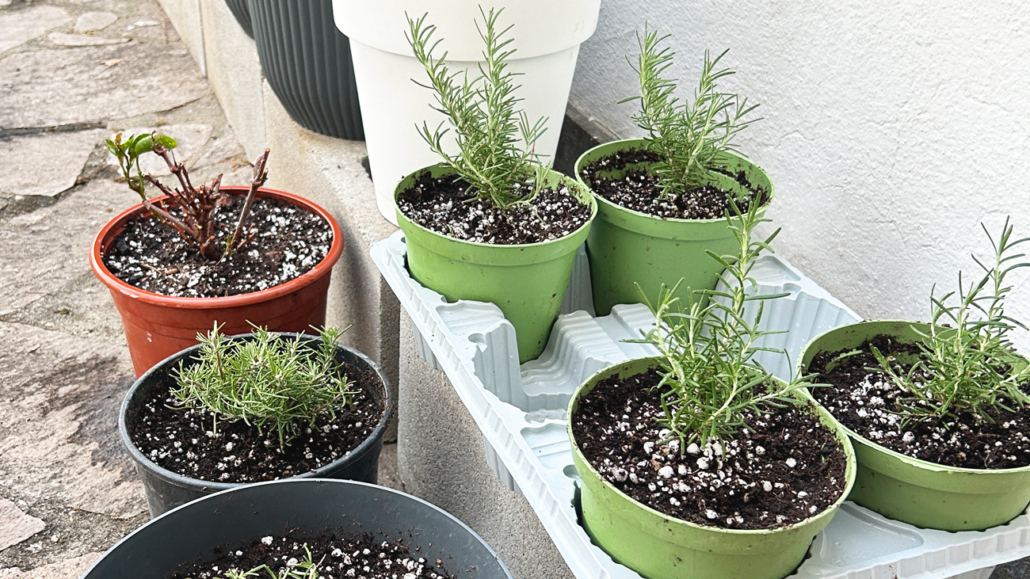
- Reusing rich vegetable-bed compost or old potting soil straight from another plant. It’s usually far too moisture-retentive for rosemary on its own, even if it worked well for something else.
- Skipping the pot’s drainage hole “just this once.” I’ve done this with a plant I loved the look of more than I checked the base of — it didn’t end well.
- Assuming all herbs want the same soil. If you’re growing rosemary alongside mint or basil, they genuinely want different conditions — rosemary wants to dry out between waterings, while mint is far more forgiving of consistently moist soil. Worth bearing in mind if you’ve been using one all-purpose mix for your entire herb collection.
Does this change with climate?
This mix works whether you’re growing rosemary in a warm, dry climate or somewhere far cooler and wetter. If anything, it matters more in a rainy climate, since there’s less natural evaporation helping the soil dry out between waterings — the free-draining mix is doing more of the work.
FAQ
Can I just use regular potting soil for rosemary?
Not on its own — regular potting soil holds too much moisture for rosemary’s roots. Mix in perlite or grit at roughly a 2:1 ratio first.
Is cactus soil good for rosemary?
Yes, cactus or succulent mix is a reasonable substitute, since it’s built for the same fast-draining, low-moisture needs. Some gardeners find it slightly too lean on nutrients for a heavy feeder like rosemary long-term, so a top-up of compost every so often helps.
Do I need perlite specifically, or will sand work?
Coarse horticultural sand or fine grit works as a substitute for perlite at the same ratio. Avoid fine builder’s sand, which can compact rather than aerate.
How often should I refresh the soil mix?
Repot into a fresh mix roughly every 2 years, or sooner if drainage seems to be slowing down (water sitting on the surface longer than it used to).
Related reading:
the full Growing Rosemary guide covers light, watering and overall care · if your rosemary’s already showing signs of trouble, start with Why Is My Rosemary Turning Brown · growing mint too? Here’s why it wants the opposite soil conditions.
Have you potted rosemary in the wrong mix before and learned the hard way? I’d love to hear what happened — drop it in the comments, it might end up saving someone else’s plant.
As an Amazon Associate, I earn from qualifying purchases. This means if you buy something through one of the links below, I may earn a small commission at no extra cost to you — I only recommend products I’d actually use myself.
Leave a Reply
Want to join the discussion?Feel free to contribute!