
Protecting Potted Plants From Extreme Heat: My experience-base guide
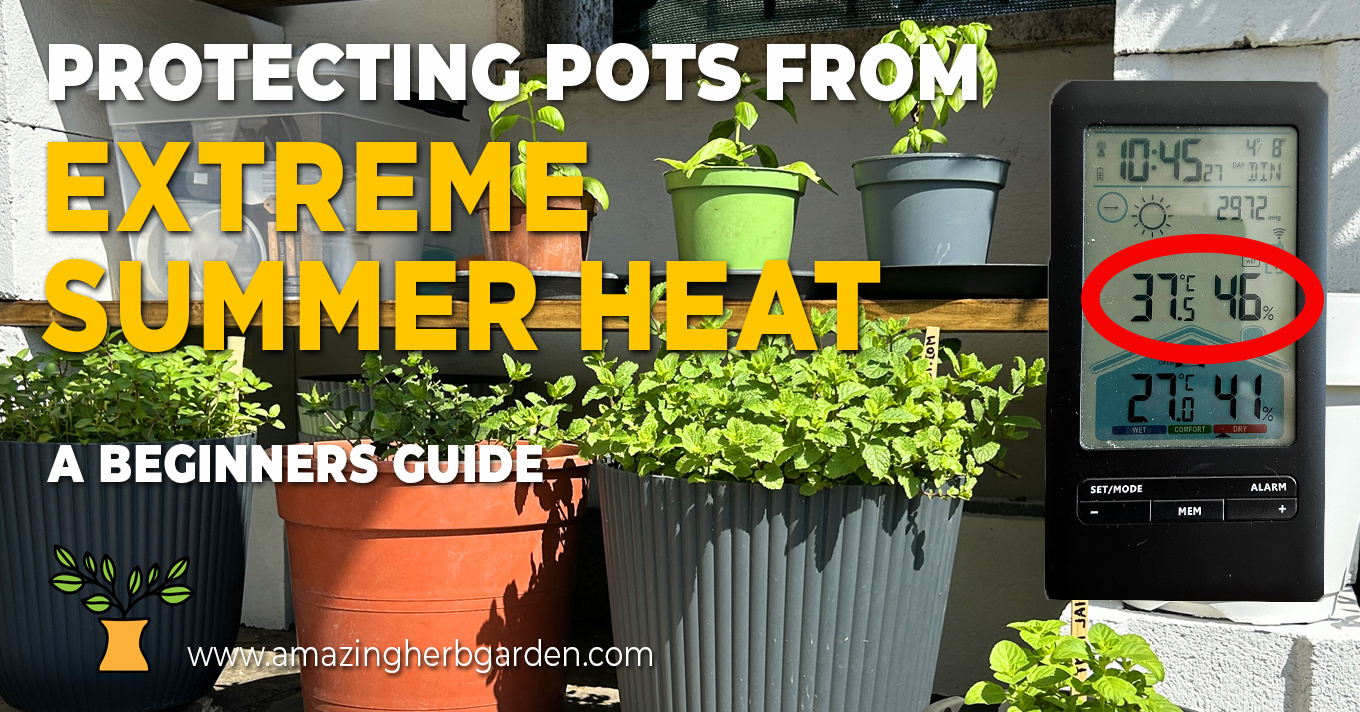
If your potted herbs are drooping by mid-afternoon, crisping at the edges, or just look “done” every time the sun really gets going, I want to reassure you straight away: this is one of the most common and most fixable problems in container gardening. Pots heat up far faster than garden soil ever does, and once you understand why, protecting them stops being guesswork.
I grow all my herbs in pots on a terrace in Rome, where summer afternoons regularly sit in the high 30s°C (upper 90s°F), and this year has brought several proper heatwaves on top of that. So this isn’t theory — it’s what I actually do, pot by pot, to keep basil, mint, rosemary and the rest alive and productive through the worst of it. Wherever you’re growing, the physics is the same; only the intensity changes.
Quick answer, if you’re in a hurry: move the pot out of direct afternoon sun if you can, water deeply first thing in the morning (and again in the early evening if it’s a real heatwave), and check whether the wilting bounces back within an hour of watering or cooler evening air. If it does, your plant is heat-stressed but fine. If it doesn’t, keep reading — Section 7 covers in very practical terms what you could do next.
1. Why pots overheat so much faster than garden soil
In the ground, roots are surrounded by a huge mass of earth that barely changes temperature day to day. A pot has none of that insulation — it’s a small, exposed container with heat coming at it from every side, plus whatever’s radiating up from the surface underneath it.
The numbers are more dramatic than most people expect:
- A dark plastic pot sitting in full sun can reach 50–65°C (130–150°F) at the container wall.
- One study found a 30 cm (12 inch) black plastic pot in full afternoon sun reached an internal soil temperature of 44°C (112°F) in under 90 minutes — even though the air temperature that day was only around 30°C (86°F).
- Concrete, tile and stone (the exact surfaces most balconies and terraces are made of) soak up heat all day and keep radiating it back into your pots long after the sun has gone down.
That last point caught me out in my first Roman summer. My terrace tiles were still noticeably warm to the touch at 10pm, and the pots sitting directly on them were staying hotter overnight than the ones I’d propped up on a couple of wooden or stone blocks. Small change, real difference.
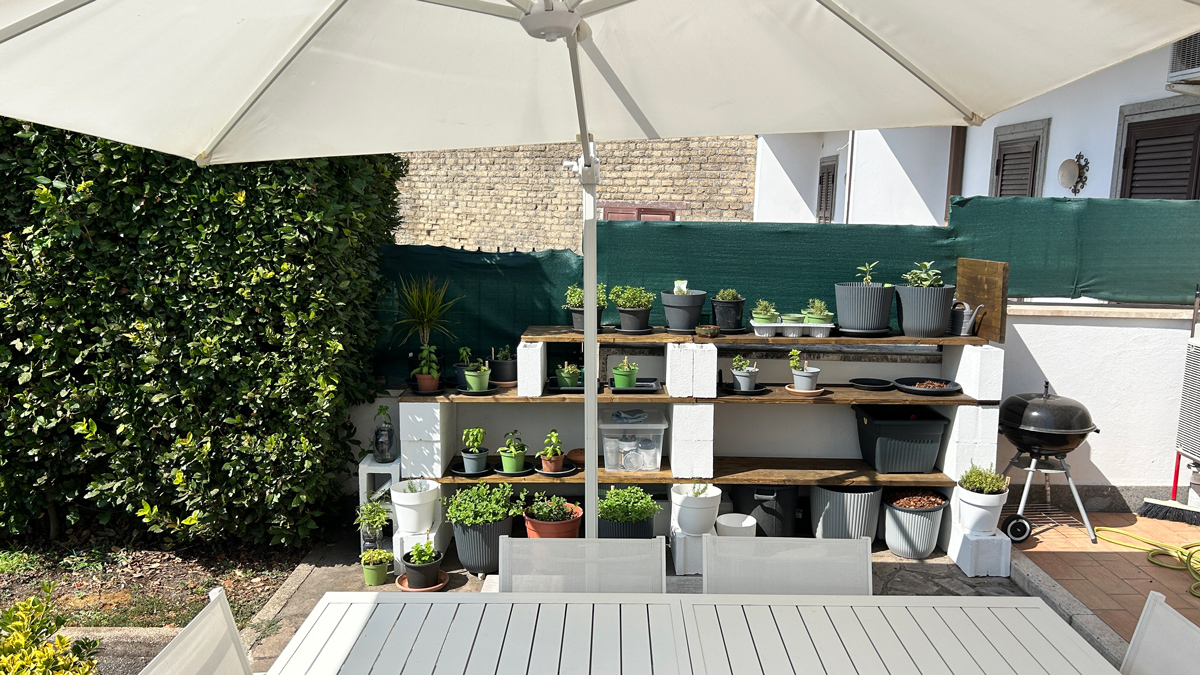
Above a view of my herb shelf getting morning sun until around 1400 in the afternoon, then the shelfs will create shadow on the lower pots.
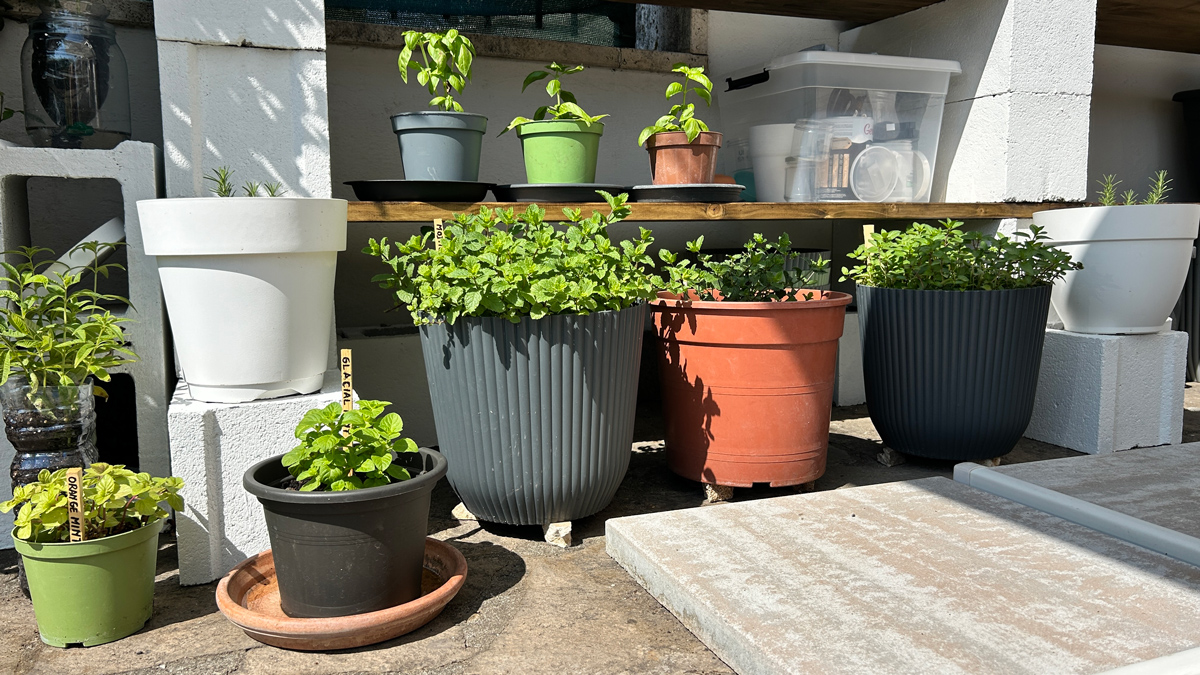
The cuttings or smaller plants can easily be moved more into the shade if necessary.
2. What heat actually does to your plant (the “why” behind the wilting)
It helps to know what’s really happening beneath the soil line, because it explains why some of the obvious fixes (like watering more) don’t always work on their own.
Root temperature and damage — general ranges:
| Soil/root temperature | What’s happening |
|---|---|
| 26–35°C (80–95°F) | Comfortable working range for most herb roots |
| ~39–40°C (102–104°F) | Root growth slows or stops in many species |
| Above ~40–41°C (104–105°F) | Root injury becomes a real risk |
| 46–49°C (115–120°F) | Root and cell death risk rises sharply |
These are general horticultural ranges rather than one exact number — different herbs and root types vary — but they show why a black pot baking on a hot terrace can genuinely cook the roots, not just the leaves.
Here’s the part that trips people up: when roots overheat, they lose the ability to take up water properly — even if the soil is moist. That’s why you can water a heat-stressed plant and still see it wilting an hour later. It’s not always thirst. Sometimes it’s roots that are too hot to do their job. Heat also knocks back the beneficial microbes in the soil that your plant relies on for nutrients, which is part of why a heat-stressed plant can look sluggish for days after a spike, not just during it.
What you’ll actually see:
- Wilting and drooping during the hottest part of the day
- Leaves curling or cupping
- Crispy, brown edges or blotches (leaf scorch), often worse on the sun-facing side
- Bolting — the plant rushes to flower and set seed instead of putting out leaf growth
- Leaf drop and new growth that comes in sparse or stalled
The reassuring bit: afternoon wilting that fully recovers by evening or the next morning is a normal, temporary response to heat, not damage — especially in drought-adapted herbs like rosemary, thyme and oregano. I see this on my own terrace most hot afternoons and no longer panic about it. The genuine warning sign is wilting that doesn’t bounce back within 30–60 minutes of watering or the evening cooling down. That’s your cue to act, not just observe (see Section 7).
3. Not all herbs feel the heat the same way
This is worth knowing before you go into rescue mode on every pot, because your response should be different depending on the herb.
More vulnerable — these need the most active protection:
- Basil — actually a warm-climate, not strictly Mediterranean, plant. It loves heat up to a point (best flavour around 27–32°C / 80–90°F) but bolts and struggles above about 35°C (95°F), especially with still air and no breeze.
- Mint — shallow-rooted and thirsty; bolts and stresses quickly once temperatures spike.
- Parsley, chervil, coriander/cilantro — all bolt readily the moment summer heat sets in properly.
More naturally heat-tolerant — still need water management, but less drama:
- Rosemary, thyme, oregano, sage, marjoram — true Mediterranean natives that evolved for exactly this kind of summer. Many varieties handle 35–38°C (95–100°F)+ without real damage, provided they’re watered infrequently and deeply rather than little and often. In fact, these are the herbs I’m most likely to accidentally kill with kindness — watering them daily in summer heat is a much bigger risk to them than the heat itself, because it invites root rot.
A nice detail I’ve noticed myself: these Mediterranean herbs often taste and smell stronger after a stretch of warm, dry stress — they push more aromatic oil into their leaves. That’s a feature of their natural adaptation, not a sign of suffering, and it’s genuinely one of my favourite things about growing rosemary and thyme through a Roman summer.
4. Fix #1 — Choose (or adapt) the right container
- Colour matters. Dark pots absorb 92–97% of the sun’s radiation and run hot; light or white pots reflect much more of it back and stay noticeably cooler. If you’re buying new pots for a hot spot, go pale.
- Material is a genuine trade-off. Unglazed terracotta cools itself through evaporation (moisture wicks through the porous walls, carrying heat away with it), but that same porosity means it dries out 25–40% faster than glazed ceramic or plastic. Thick-walled glazed ceramic or heavy-duty plastic insulates the root zone better but won’t self-cool the same way. Neither is “wrong” — just match the pot to how often you can realistically water.
- Double-pot for extra insulation. Slide the plant’s existing pot inside a larger outer pot and pack the gap between them with straw, mulch, or just an air space. That layer buffers the root zone from direct heat, and it’s one of the cheapest fixes going.
- Go bigger where you can. More soil volume means more thermal mass and more water reserve, so bigger pots heat up and dry out more slowly than small ones — a side benefit worth remembering next time you’re repotting.
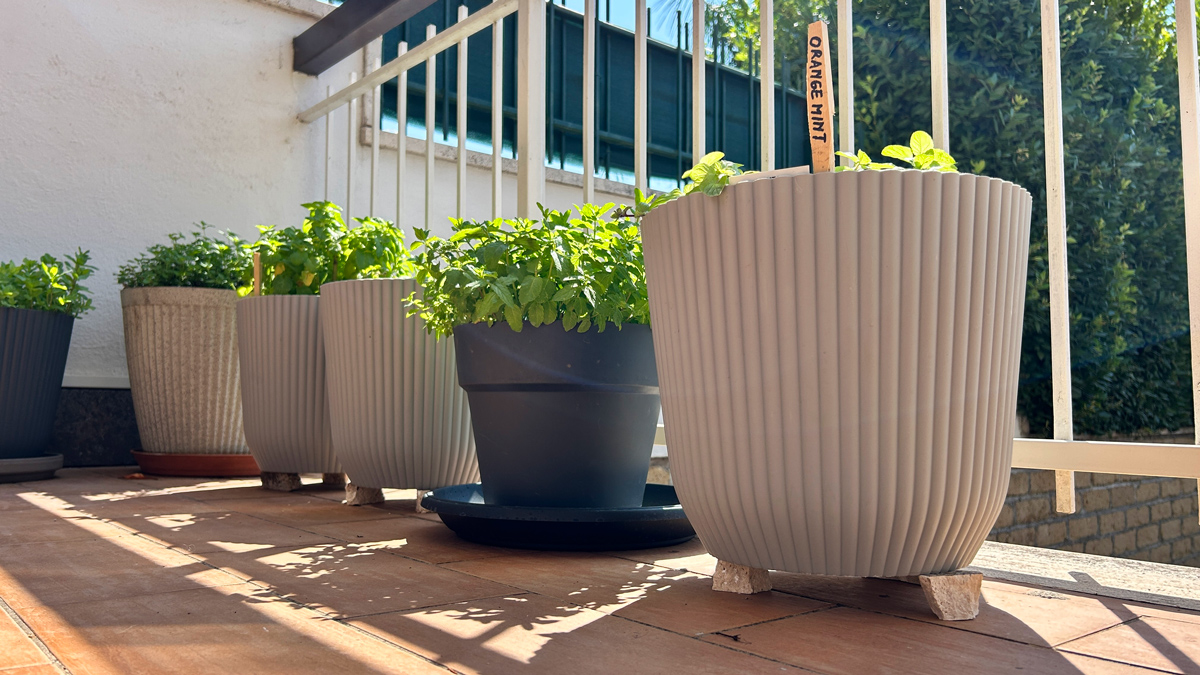
I am convinced these small blocks I use as pot feet will make a huge difference for the tempearture in the pot and thus for the roots.
5. Fix #2 — Get smart about placement
- Get pots off hot, hard surfaces. Concrete, tile and stone radiate stored heat back up into the pot for hours after the sun’s gone. Raising pots on pot feet, wooden blocks, or even old broken terracotta shards creates an insulating air gap underneath — small effort, real payoff. This was the single biggest change I made on my own terrace.
- Chase the shade for the worst hours. If a pot is movable, shift it out of direct sun during the harshest window — roughly midday to mid-afternoon. Morning sun is far gentler than afternoon sun, so a spot that’s bright at 9am but shaded by 1pm is often ideal.
- Group your pots together. Plants shade each other’s containers and the cluster holds humidity better than pots standing alone spaced out in full sun. It also makes shared watering tricks (below) easier to set up.
- Use shade cloth on the worst days. Proper shade cloth (around 30–50% shade rating for edible plants) can drop the temperature underneath by up to about 5.5°C (10°F) compared with open sun — enough to take the edge off a genuine heatwave without blocking all light.
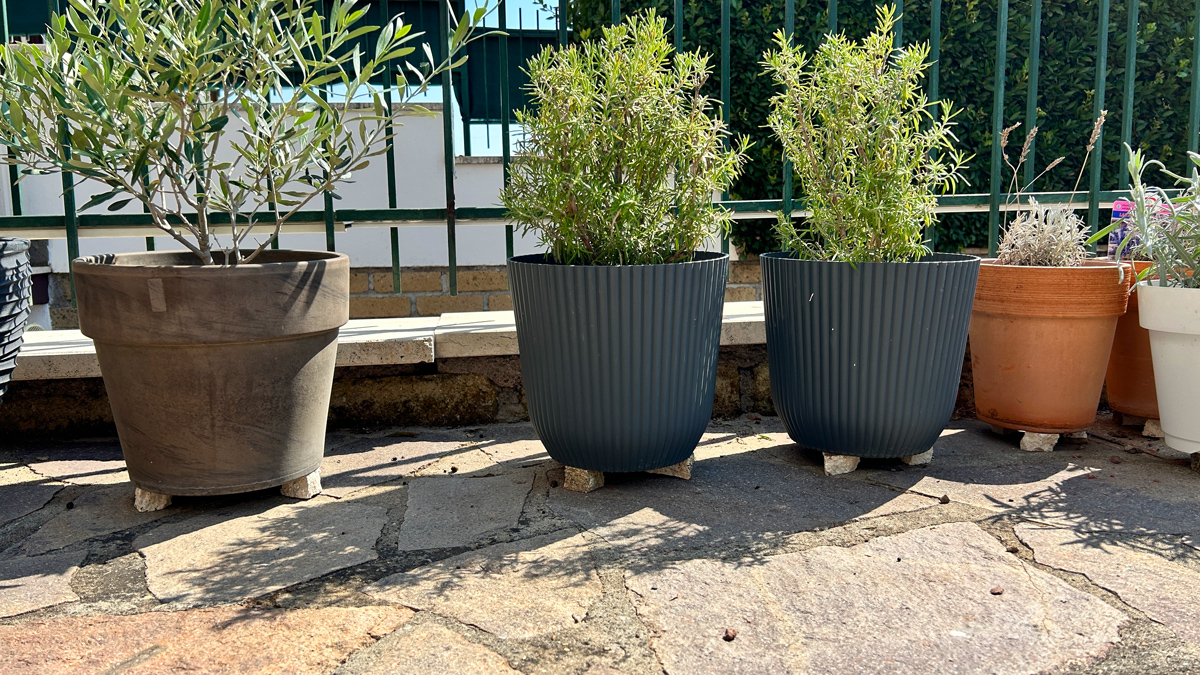
This row of pots are lined up to the south, creating some shade to the pot next to it. All bits can help.
6. Fix #3 — Get the watering strategy right
- Water deeply, early in the morning. This is the single best-supported piece of advice across the board: it hydrates the plant ahead of the day’s heat and lets any wet foliage dry off during the day, which also cuts fungal disease risk. I use morning bottom watering, so they plants suck up the water their soil needs.
- Add a lighter evening watering in a genuine heatwave, especially for thirsty herbs like basil and mint — this replaces what the day took out while there’s still time for the roots to take it up before night. Go easier on rosemary, thyme, oregano and sage here; they’re much more at risk from soggy roots than from heat itself.
- Never “rescue” a wilting plant by watering in the blazing midday sun. It’s not that this burns the plant — that’s a myth (more on that in Section 9) — it’s simply inefficient, since most of the water evaporates before it ever reaches the roots.
- Check by weight or finger-test, not by the calendar. A small pot can go from moist to bone-dry within a single hot day, so a fixed “water every two days” routine can quietly fail you during a heatwave. Or if unsure or to double-check, use a moisture meter.
- Mulch the surface. A layer of straw, bark, compost, or even gravel cuts evaporation and buffers the top few centimetres of soil from direct sun. It’s cheap, simple, and stacks nicely with everything else on this list.
- Try a wicking reservoir for hands-off consistency. Run a cotton rope or felt strip from a small water reservoir (a jug, bottle, or bucket tucked among a group of pots) into the soil, and it’ll draw water up by capillary action between waterings. Genuinely useful if you’re out at work all day or heading away for a few days mid-heatwave.
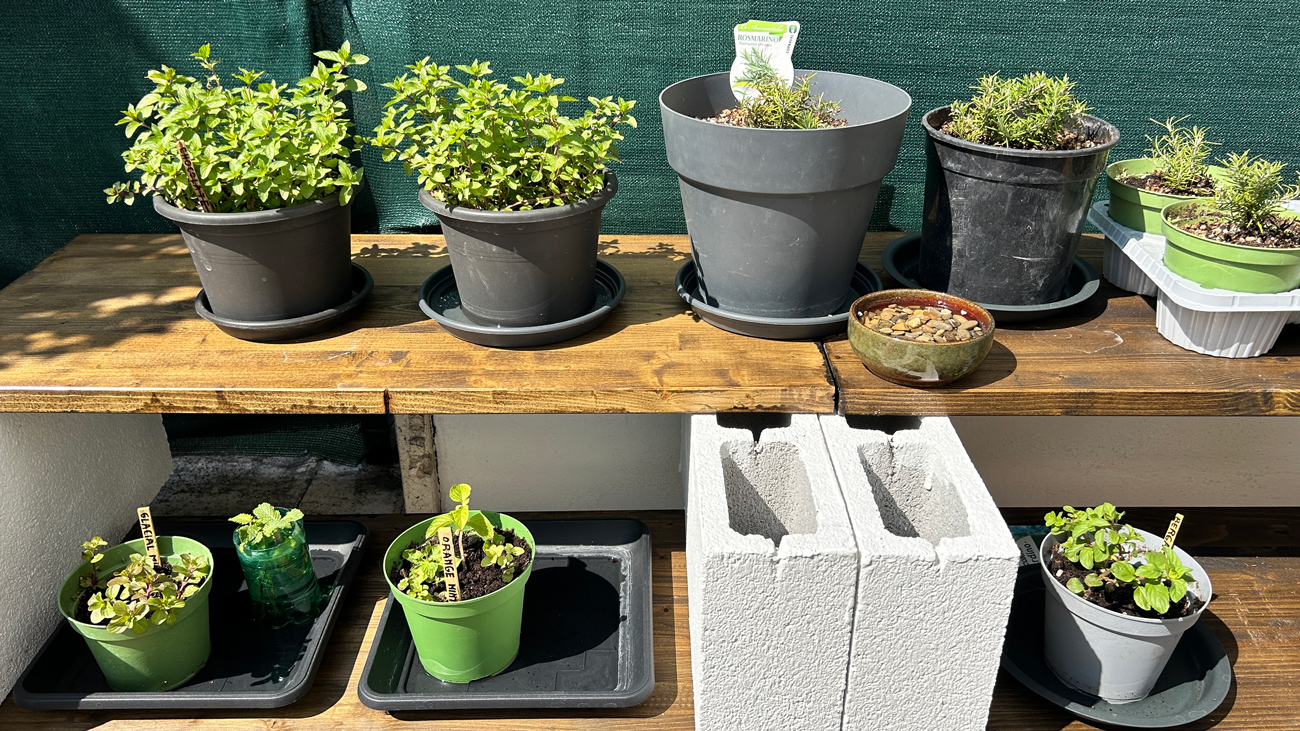
I use bottom watering, especially for the smaller pots and starters.
7. What to do if a plant doesn’t bounce back
If you’ve watered and given it shade, and the wilting still hasn’t improved within 30–60 minutes, treat it as real heat stress rather than the normal daily dip:
- Move it into full shade immediately, even if that’s not its long-term spot.
- Water again, slowly and deeply, letting it soak in rather than run straight through.
- Mist the foliage lightly — this genuinely does cool leaves for a short while, as the evaporating water pulls heat from the surface. Treat it as a top-up, not a substitute for watering the roots.
- Leave it alone otherwise. Don’t prune, feed or repot a heat-stressed plant — all three add extra stress on top of what it’s already dealing with, and recovery is much more likely if you just let it settle for a few days in gentler conditions.
- Expect some leaf drop or scorched leaves to stay damaged — they won’t heal, but new growth should come in fine once temperatures ease and the roots recover.
8. Gear that genuinely helps (my honest take)
I’d rather point you to the category of product that helps than fake enthusiasm for something I haven’t personally tested — so here’s what to look for, and I’ll update this section with my actual picks and links once I’ve properly trialled them on my own terrace:
- Light-coloured or double-walled pots for anything that has to sit in full afternoon sun.
- Pot feet or risers — inexpensive, and the easiest single upgrade if your pots currently sit directly on tile, stone or concrete.
- Shade cloth (30–50% rated for edibles), ideally with simple clips or a small frame so it’s quick to put up and take down as heatwaves come and go.
- A simple wicking/self-watering setup for herbs you can’t check on daily, especially if you travel in summer.
9. Myth-busting: does watering in direct sun burn the leaves?
No — and this one’s worth putting to bed. The idea is that water droplets sitting on a leaf act like tiny magnifying glasses and scorch the surface in strong sun. In reality, a droplet sitting directly on a leaf is far too close to the surface to focus light the way a lens held at a distance would, and on smooth leaves the water evaporates too quickly to do any damage at all. The one real exception is leaves covered in fine hairs (some ferns, for example), which can hold a droplet slightly proud of the surface — not a concern for basil, mint, rosemary or any of the herbs we grow here. Water whenever you need to; just do it efficiently (see Section 6) rather than worrying about scorch that was never really a risk.
A quick recap
Pots overheat because they have none of the insulation that garden soil provides, and hard surfaces underneath make it worse. Once root temperatures climb past roughly 40°C (104°F), water uptake and root growth both suffer — which is why a heat-stressed plant can wilt even when the soil’s damp.
Mediterranean herbs like rosemary, thyme and oregano shrug off heat far better than basil, mint or parsley, so it’s worth treating them differently rather than rescuing every pot the same way.
And the fixes that actually move the needle are simple: a paler or better-insulated pot, getting containers off hot pavement, chasing shade in the worst hours, watering deeply in the morning, and mulching the surface.
I’d genuinely love to hear how your own pots are coping this summer, wherever you’re growing — drop a comment below with what’s struggling and I’ll help you troubleshoot it.
And if you want the full rundown I use for watering herbs properly all year round, not just in a heatwave, that’s exactly what’s in my watering guide Herb-Book — or come find me and the rest of the growers in the Amazing Herb Garden Community on Facebook, where we swap this kind of thing constantly through the summer.
Related guides: Growing Rosemary · Growing Basil · Growing Mint · Common Herb Pests & Problems
Affiliate disclosure: this post may contain affiliate links, including to Amazon. If you buy through one, I may earn a small commission at no extra cost to you. I only recommend things I’d genuinely use myself.
Leave a Reply
Want to join the discussion?Feel free to contribute!